Last updated: November 19, 2026. Coverage period: November 12 to 19, 2026.
US solar news this week was dominated by a tariff deadline, new utility-scale plans in Florida and California, and the shutdown of a U.S. battery maker. If you’re planning to buy panels, sign an installation contract or invest in a commercial project, these are the five stories to know, with links to every original source.
Key takeaways
- Section 232 solar tariffs and minimum import prices on polysilicon, wafers, cells and modules take effect December 4, 2026.
- Duke Energy Florida filed plans for 300 MW at four new sites, citing about $1 billion in estimated customer savings.
- Avantus signed 20-year agreements with PG&E for 800 MW of PV and 3.2 GWh of storage, pending CPUC approval.
- ESS Tech, an iron-flow battery maker, ceased operations and filed for Chapter 7 bankruptcy on November 13.
- New York’s NYSERDA outlined new NY-Sun incentive blocks.
In this article: Section 232 solar tariffs · Duke Energy Florida · Avantus and PG&E · ESS Tech · Other news · Key dates · FAQ
1. Section 232 solar tariffs take effect December 4

The biggest policy item on installers’ calendars is the Section 232 action on polysilicon and its derivatives. According to a client alert from law firm Hunton Andrews Kurth, a presidential proclamation issued August 6, 2026 sets a generally 15% additional duty on covered products, with different treatment for some trading partners, effective December 4, 2026.
What the Section 232 measures include
| Product | Minimum import price |
|---|---|
| Polysilicon | $21/kg |
| Silicon ingots and wafers | $100/kg |
| Solar cells | $0.22/W |
| Solar modules | $0.38/W |
The measures replace the Section 201 safeguard tariffs, which expired on February 7, 2026. On November 17, pv magazine USA published a risk-mitigation playbook for developers ahead of the deadline.
Will solar panel prices go up?
Imported cells and modules may cost more after December 4, but the effect on any single quote depends on where the equipment comes from and what the installer already has in stock. If you have a signed quote, check whether it includes a price-adjustment clause for tariffs. Commercial projects racing the federal credit deadlines (see our Commercial Solar guides) should confirm equipment pricing in writing.
2. Duke Energy Florida plans 300 MW across four sites
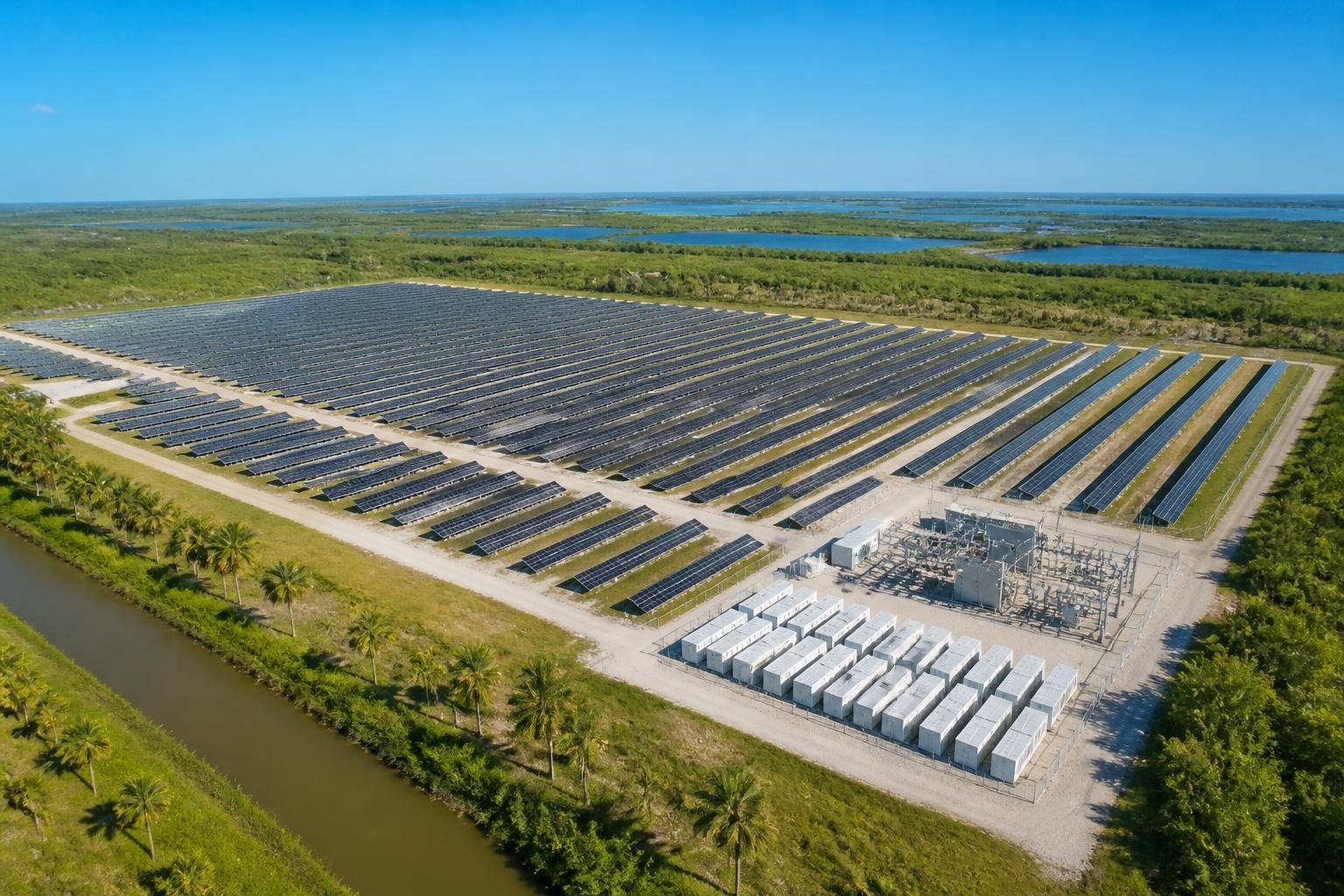
Duke Energy Florida filed plans with the Florida Public Service Commission for four new utility-scale sites, three in Orange County and one in Sumter County, totaling 300 MW, T&D World reported on November 12. The utility estimates about $1 billion in customer savings over the projects’ lifetimes.
| Site | County | Construction start | Expected completion |
|---|---|---|---|
| Nova Renewable Energy Center | Orange | January 2027 | February 2028 |
| Bull Creek Renewable Energy Center | Orange | March 2027 | April 2028 |
| Hogeye Renewable Energy Center | Sumter | May 2027 | May 2028 |
| Wewahootee Renewable Energy Center | Orange | May 2027 | June 2028 |
The company also said it plans more than 1 GW of battery storage over the next 10 years.
3. Avantus signs 800 MW PV and 3.2 GWh storage deals with PG&E
Developer Avantus signed 20-year power purchase agreements with Pacific Gas and Electric for 800 MW of photovoltaic capacity and 3,200 MWh of battery storage at the Buttonbush 1A and 1B projects in western Kern County, California, according to TaiyangNews (November 18). The report puts the estimated investment at $3 billion, with construction starting in 2027 and commercial operation targeted for 2029. The agreements still need approval from the California Public Utilities Commission.
4. ESS Tech shuts down and files for Chapter 7
ESS Tech, a U.S. maker of non-lithium energy storage that developed iron-flow batteries and had shifted toward sodium-ion, ceased operations and filed a voluntary Chapter 7 petition in the U.S. Bankruptcy Court for the District of Delaware on November 13, 2026, TaiyangNews reported. All employees and officers were terminated that day, and the company said common shareholders are unlikely to receive a distribution. pv magazine USA also covered the news.
Why it matters: ESS sold mainly to commercial and utility customers, but the case is a reminder to check a battery manufacturer’s financial strength and warranty backing before you buy.
5. Other notable US solar news this week
- New York: NYSERDA outlined new NY-Sun incentive blocks and delayed the Upstate nonresidential rate for projects between 1 and 5 MW (pv magazine USA, Nov. 17). New York residents should check current block incentives on the NYSERDA website.
- Domestic manufacturing: Inox Solar Americas’ 3 GW cell plant in Greenville, North Carolina has moved into equipment installation, with production expected in Q2 2027 (PV Tech).
- Residential modules: Sirius PV unveiled 525 W perovskite tandem residential modules and an IronRidge partnership (pv magazine USA, Nov. 18).
- Supply chain: Thornova and Nextpower signed an agreement to use U.S.-made steel frames in selected Thornova modules (TaiyangNews).
Key dates to watch
| Date | What happens |
|---|---|
| February 7, 2026 | Section 201 safeguard tariffs expired |
| November 13, 2026 | ESS Tech filed for Chapter 7 |
| December 4, 2026 | Section 232 tariffs and minimum import prices take effect |
| January to May 2027 | Construction scheduled to start at Duke Energy Florida’s four sites |
| Q2 2027 | Inox Solar Americas’ Greenville cell plant expected to start production |
| June 2028 | Duke Energy Florida’s sites tentatively in service |
| 2029 | Avantus Buttonbush projects targeted for commercial operation |
What this week’s US solar news means for you
- Homeowners: lock in quotes with clear terms before December 4 if you’re close to signing, and be wary of any pitch that still promises the 30% homeowner credit. The Residential Clean Energy Credit (25D) ended for expenditures after December 31, 2025, according to the IRS. Our Home Solar guides explain your options.
- Businesses: tariff costs and federal credit deadlines now overlap, so get equipment pricing and delivery dates in writing.
- Battery buyers: check the manufacturer’s track record and who backs the warranty if the company fails.
FAQ
When do the Section 232 solar tariffs take effect?
December 4, 2026, according to Hunton Andrews Kurth’s summary of the August 6, 2026 proclamation. They cover polysilicon, certain ingots and wafers, cells and modules.
How big are the new solar tariffs?
Generally a 15% additional duty, with different treatment for some trading partners, plus minimum import prices such as $0.22 per watt for cells and $0.38 per watt for modules.
Is the 30% solar tax credit still available for homeowners?
No. The IRS says the Residential Clean Energy Credit (Section 25D) is not allowed for expenditures made after December 31, 2025. Some leases and PPAs may still benefit from a commercial credit the owner claims.
What happened to ESS Tech?
ESS Tech ceased operations and filed a voluntary Chapter 7 petition in Delaware on November 13, 2026. A court-appointed trustee oversees the liquidation of its assets.
Where can I follow US solar news every week?
We publish a weekly roundup of US solar news, policy and market changes in our news section, with links to every original source.