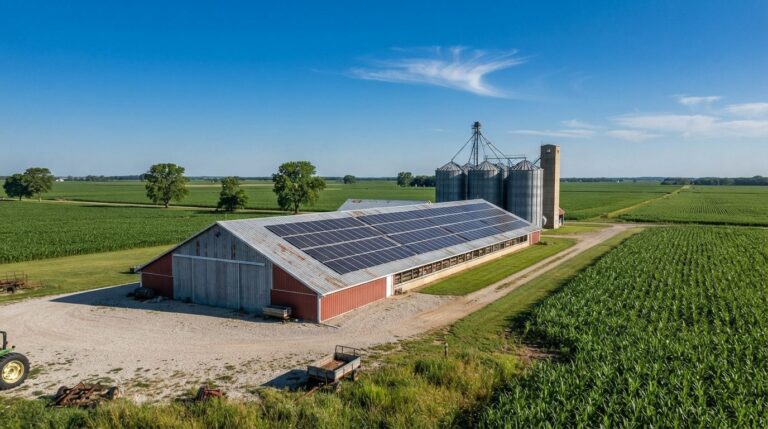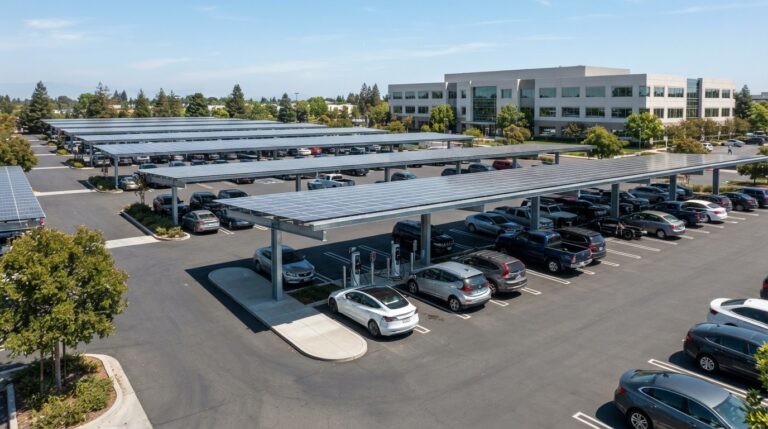
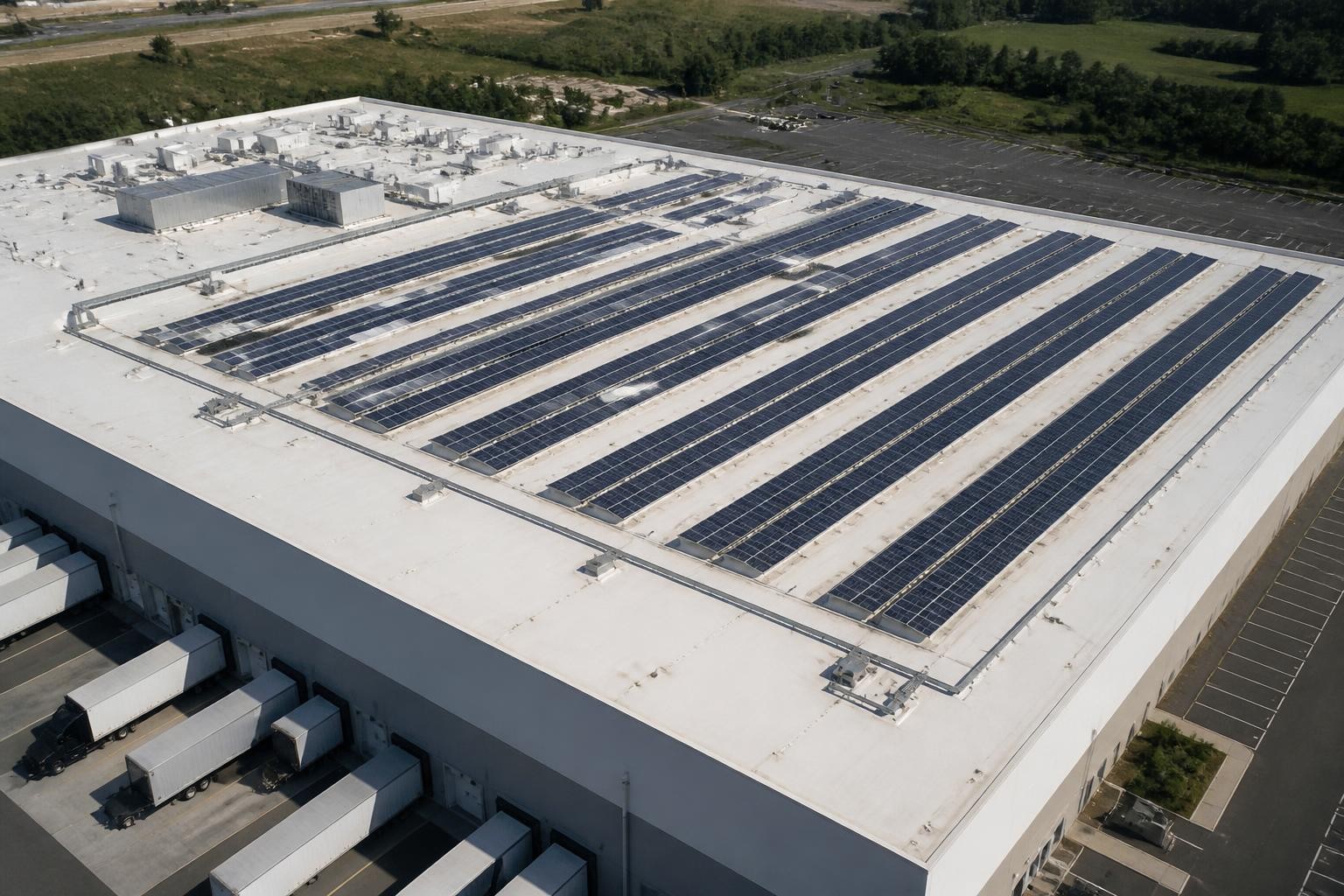
If you own a business, a farm or a commercial building, the federal solar tax credit is still on the table, but the window is now measured in months, not years. The rules changed twice in 2025: first with the One Big Beautiful Bill Act (OBBBA) in July, then with new IRS guidance on when construction “begins.” This guide explains where the commercial solar tax credit stands as of November 2026 and what a business owner should do now.
This is general information, not tax or legal advice. Rules are summarized as of November 2026. Work with a CPA or tax attorney who handles energy credits before you rely on any credit.
Quick answer
- Commercial solar in the U.S. is generally claimed under Section 48E, the Clean Electricity Investment Credit. The base credit is 6%, rising to 30% for projects that meet prevailing wage and apprenticeship rules or are exempt from them (projects under 1 MW AC are exempt).
- For solar, a project that began construction after July 4, 2026 must be placed in service by December 31, 2027 to qualify. Projects that began construction on or before July 4, 2026 are not subject to that 2027 cutoff, but they must show continuous work.
- Since 2026, projects must also comply with new “prohibited foreign entity” (FEOC) sourcing rules.
- If you’re starting from scratch today, the realistic goal is a system that is fully installed, inspected and operational before the end of 2027.
Which credit applies to commercial solar now?
Since 2025, the old Section 48 investment credit has been replaced for new projects by the technology-neutral Section 48E investment credit and its production-based twin, Section 45Y. Most businesses that install solar on a roof, carport or field choose the investment credit (48E), which is a percentage of eligible project cost. Large generators sometimes choose the production credit (45Y) instead.
The homeowner credit (Section 25D) is a different program. It ended for expenditures after December 31, 2025, according to the IRS. Business-owned systems were never claimed under 25D, so that change does not by itself end commercial credits.
The key deadlines for commercial solar
The OBBBA added a sunset for wind and solar under 48E and 45Y. As summarized by RSM:
| When construction began | Placed-in-service requirement | Status as of Nov. 2026 |
|---|---|---|
| On or before July 4, 2026 | No 2027 cutoff, but construction must be continuous (safe harbor: placed in service within four calendar years after the year construction began) | Window to start has closed; projects already started can continue |
| After July 4, 2026 | Must be placed in service by December 31, 2027 | Still possible, but timelines are tight |
“Placed in service” generally means the system is installed and ready and available for its intended use. In practice, utility interconnection and permission to operate can be the slowest steps, so build in time for them.
What counts as “beginning construction”?
IRS Notice 2025-42 tightened the rules in August 2025. According to RSM’s summary:
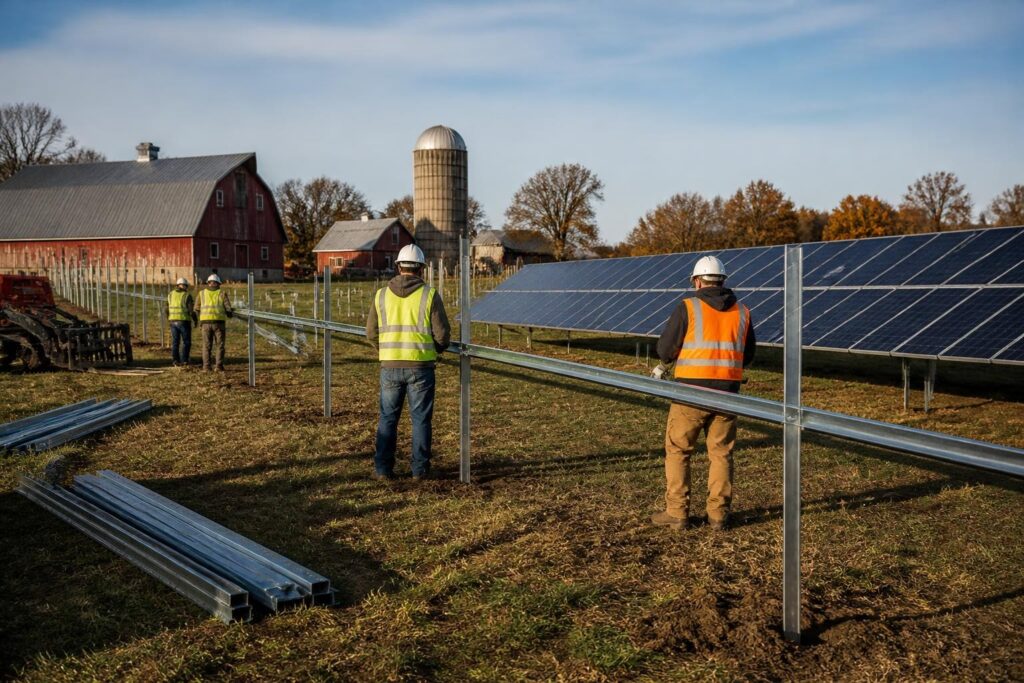
- Construction begins when physical work of a significant nature starts, on-site (for example, installing racking) or off-site under a binding written contract (for example, custom manufacturing of components not held in a seller’s inventory).
- Planning, financing, permitting and site clearing don’t count.
- The old “5% safe harbor” (spending 5% of costs) was eliminated for most projects. It remains available only for small solar projects with a maximum net output of 1.5 MW AC.
Because the July 4, 2026 start date has passed, these rules matter mainly for projects that claim they started before it. Keep contracts, invoices, photos and site logs.
FEOC rules: where your equipment comes from now matters
Starting in 2026, the law adds “prohibited foreign entity” restrictions. The Tax Law Center at NYU Law explains that “material assistance” rules apply to facilities beginning construction after 2025. A project must show that a minimum share of its component costs comes from non-prohibited sources: 40% for qualified facilities that begin construction in 2026, rising over time (higher thresholds apply to energy storage). Treasury has issued further guidance (Notice 2026-15) on these rules.
What this means for you: ask your installer, in writing, for documentation showing the equipment meets FEOC requirements, and who bears the risk if the credit is denied.
How much is the commercial solar tax credit worth?
| Component | Rate | Notes |
|---|---|---|
| Base credit | 6% | If prevailing wage and apprenticeship (PWA) rules apply and aren’t met |
| Full credit | 30% | PWA met, or project under 1 MW AC (exempt) |
| Domestic content bonus | Up to +10 points | Steel/iron and manufactured-product thresholds |
| Energy community bonus | Up to +10 points | Location-based (certain brownfields, former coal areas, etc.) |
| Low-income bonus | +10 or +20 points | Requires a separate capacity allocation; limited |
Rates above reflect the 48E structure as enacted. Bonus eligibility is detailed and project-specific, so confirm each adder with your tax advisor. The credit also generally reduces the project’s depreciable basis by half the credit amount, and depreciation treatment (including bonus depreciation) has its own rules in IRS Publication 946.
Transferability and direct pay
Businesses without enough tax liability can often sell (transfer) eligible credits to another taxpayer for cash under Section 6418. Direct pay (elective pay) under Section 6417 is mainly for tax-exempt entities such as nonprofits, schools and local governments. Ask your advisor which option fits your entity.
Farms and rural businesses: what about USDA REAP?
Many farms combined the federal tax credit with USDA’s Rural Energy for America Program (REAP). In 2026 REAP has been in flux. Reports based on USDA Rural Development announcements say new grant awards were paused in March 2026 pending revised regulations, while guaranteed loans continued, and certain ground-mounted solar projects face new restrictions. Check the current status directly with USDA Rural Development or your state office before planning around a grant.
Pros and cons of moving forward now
Pros
- A credit of up to 30% (or more with adders) is still available for projects that meet the deadlines.
- Transferability can turn credits into cash for businesses with limited tax liability.
- Commercial roofs, carports and farm buildings often have large, unshaded areas and steady daytime loads that fit solar well.
Cons
- Tight timelines: interconnection, permitting or equipment delays can push a project past December 31, 2027.
- FEOC documentation adds supply-chain and compliance risk.
- Tariffs on imported cells and modules may affect equipment prices (see our Solar News coverage).
A practical checklist for business owners
- Get your load data. Pull 12 months of utility bills and interval data, if available.
- Check interconnection early. Ask your utility about queue times and any study requirements for your system size.
- Request bids with a schedule. Ask installers for a written timeline to permission to operate, with a buffer before December 31, 2027.
- Demand FEOC and domestic content paperwork if your financial model depends on them.
- Confirm code compliance. Systems must follow the NEC (NFPA 70), including Article 690 for PV and rapid-shutdown rules for buildings, with listed equipment such as UL 1741 inverters and UL 9540 energy storage systems.
- Bring in your CPA before signing, not after installation.
- Check state programs on DSIRE, as many states have separate incentives, net metering or net billing rules for commercial customers.
For more on business systems, explore our Commercial Solar guides.
FAQ
Is the commercial solar tax credit still available in 2026?
Yes, for projects that qualify under Section 48E and meet the deadlines. Solar projects that began construction after July 4, 2026 must be placed in service by December 31, 2027.
My project hasn’t started yet. Can it still qualify?
Potentially, if it is placed in service by December 31, 2027 and meets FEOC and other requirements. A new project starting now has to move quickly.
Does the 5% safe harbor still work?
Only for small solar projects with a maximum net output of 1.5 MW AC, according to Notice 2025-42 summaries. Larger projects must use the physical work test.
Can a farm use the 48E credit?
Yes. Farms that own their solar systems are businesses and can generally use 48E, subject to the same deadlines and rules. USDA REAP grants are a separate program and their status changed in 2026.
Do I have to pay prevailing wages?
Projects of 1 MW AC or more must meet prevailing wage and apprenticeship rules to get the full 30% rate. Smaller projects are exempt from those rules for the higher rate.
Can I sell my solar tax credit?
Many businesses can transfer eligible credits to another taxpayer for cash under Section 6418. Terms depend on the buyer, project size and risk.
Conclusion
The commercial solar tax credit hasn’t disappeared, but it now comes with a hard deadline for most new projects: placed in service by the end of 2027. Businesses and farms that want the credit should line up load data, interconnection, equipment documentation and tax advice now, and choose an installer who can commit to a realistic schedule. Waiting another year could mean building the same system without the credit.