Last updated: November 20, 2026.
If you’re weighing a solar quote, the lifespan of the system matters as much as the price: the longer the equipment keeps producing, the more electricity you get for the money. Most quotes mention “25 years,” but that number is a warranty term, not an expiration date. This guide explains what the research actually shows about how long solar panels last, how long the other parts of a home system last, and what to plan for along the way.
Quick answer
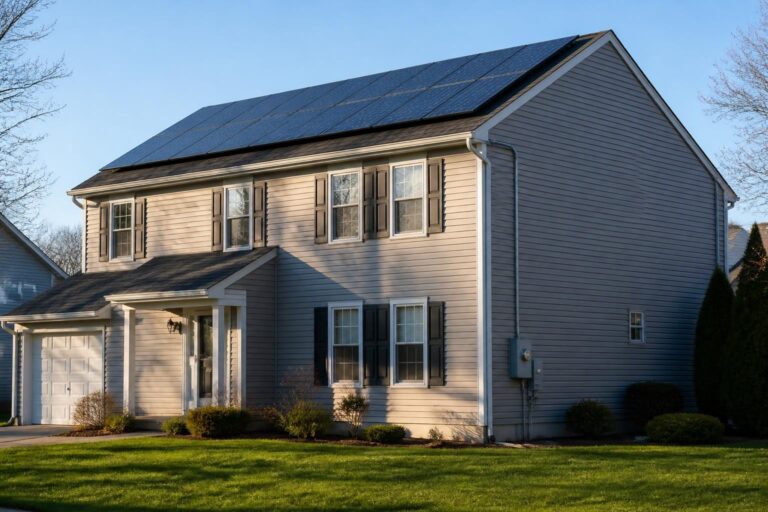
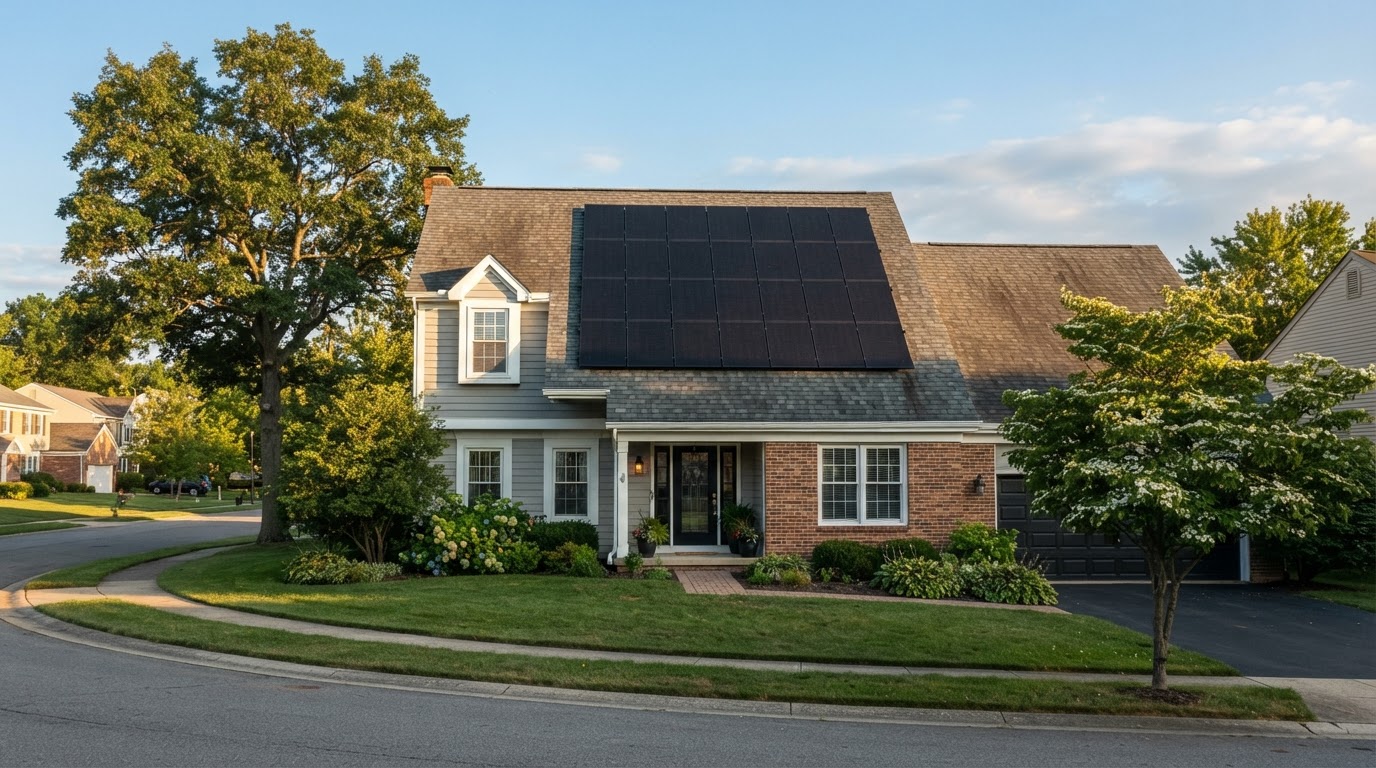
- Panels: Quality crystalline-silicon panels are generally expected to last 25 to 35 years or more. The EPA says they are “expected to last for 25 years or longer,” and the Department of Energy cites a Berkeley Lab survey putting typical lifespans at roughly 25 to 35 years.
- Output loss: Panels don’t stop working at year 25. They slowly lose output, typically around 0.5% to 0.75% per year, according to NREL research.
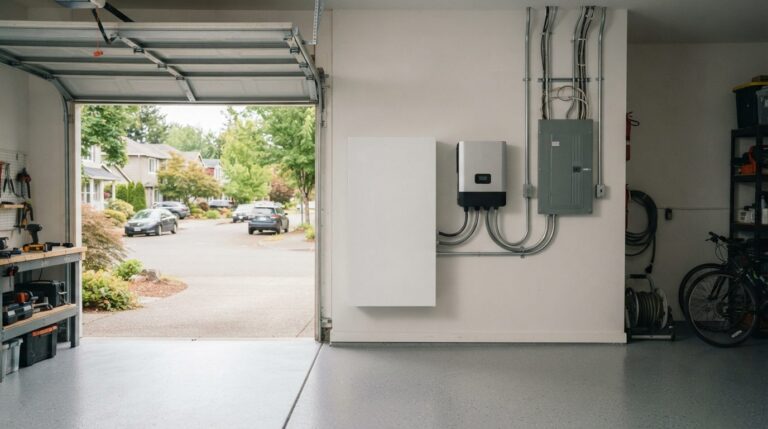
- Inverters and batteries usually need attention sooner than panels. Many string inverters carry 10- to 12-year standard warranties, microinverters often 25 years, and home batteries commonly 10 years.
- Plan for: at least one inverter replacement on a string-inverter system, possibly a battery replacement, and a roof that will outlast the array.
How long do solar panels last?
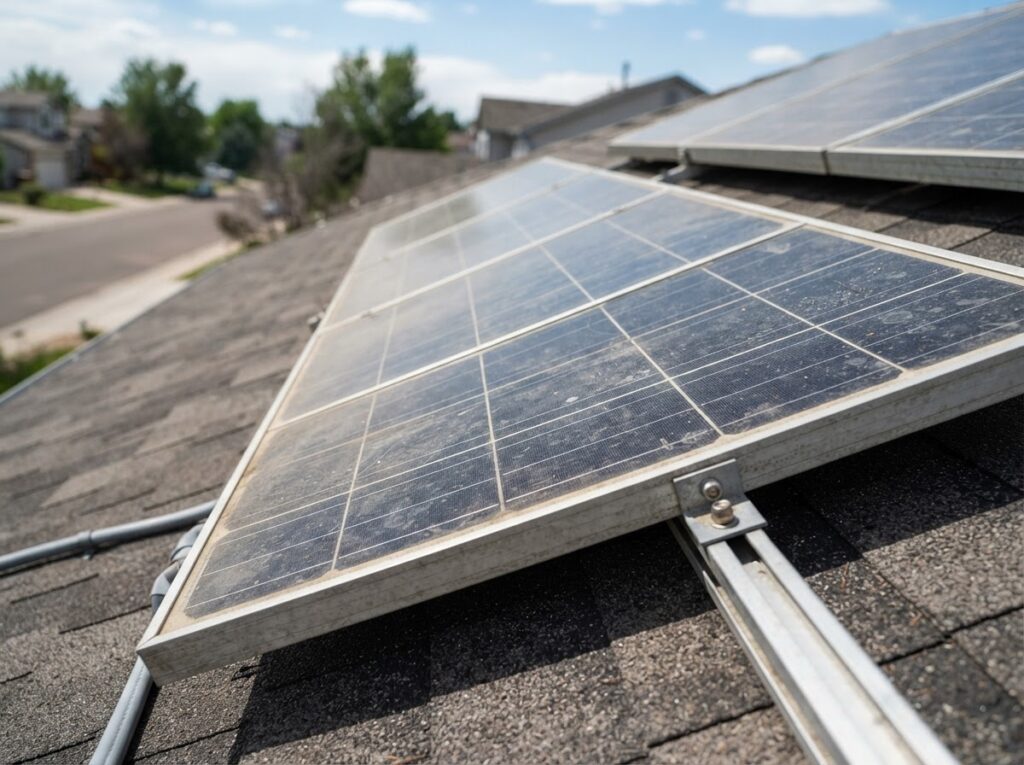
There is no single “death date” for a solar panel. Instead, panels lose a small amount of output each year, a process called degradation. A panel can keep generating useful electricity well past its warranty period; it just produces a bit less than it did when new.
Long-term evidence supports this. The Lawrence Berkeley National Laboratory found that the expected useful life assumed for utility-scale PV rose from about 21.5 years in 2007 to about 32.5 years in 2019, and 17 of the 19 organizations it surveyed assumed 30 years or more (LBNL). A peer-reviewed study of six Swiss systems installed between 1987 and 1993 found that most were still producing more than 80% of their original output after roughly three decades (Özkalay et al., RSC).
Those older systems used technology that is less refined than today’s modules, which is one reason researchers now expect longer lifespans from new equipment. Still, any individual panel can fail early because of a manufacturing defect or physical damage, which is why the warranty matters.
Solar panel degradation rate: what the data shows
The National Renewable Energy Laboratory (NREL), which the DOE renamed the National Laboratory of the Rockies in December 2025, has studied degradation for decades:
- A review of about 2,000 published degradation rates found a median of 0.5% per year and a mean of 0.8% per year, with a tail of poorer products pulling the average up (NREL).
- An updated review of more than 11,000 data points again found a median of 0.5% per year for high-quality crystalline-silicon studies.
- A 2024 study of about 2,500 commercial and utility-scale sites in 37 states (more than 8 GW) found a median loss of 0.75% per year, with 90% of systems losing less than about 2% per year (NREL). With soiling excluded, the median was about 0.5% per year (full report).
Some modules also lose about 1% to 2% in their first months of sunlight because of light-induced degradation, which is why many warranties allow a larger drop in year one.
What 0.5% per year means in practice
As a simple illustration (our arithmetic, not a forecast for any specific product): a panel that keeps about 98% of its rating after year one and then loses 0.5% of its original rating each year would still produce roughly 86% of its nameplate output at year 25. That matches the typical warranty curve shown below. A system that degrades at 0.75% per year would end up lower, and climate makes a measurable difference, as the next section shows.
What shortens solar panel life
NREL’s US fleet study pinpointed several factors that speed up wear:
- Heat: Systems in hot climates degraded at an average of 0.88% per year, compared with 0.48% per year in cooler climates. Homeowners in the Southwest and Gulf states should expect somewhat faster output loss.
- Hail: Systems hit by hail larger than 1 inch lost performance faster in the following years, even when modules were certified to the IEC 61215 hail test.
- High wind: Wind above about 56 mph was linked to faster degradation afterward.
- Heavy snow: Snow deeper than about 3 feet stressed modules mechanically.
- Cell cracks: NREL documented a module that was stable for a decade and then dropped suddenly when a crack created a hot spot.
- Potential-induced degradation (PID): a voltage-related loss mechanism studied in this NREL paper, mostly relevant to higher-voltage strings.
- Poor installation: Walking on panels, overtightened clamps and sloppy wiring can cause damage that warranties typically exclude.
Recommendation: If you live in hail country, ask installers about module hail ratings and whether your homeowners insurance covers rooftop solar. In heavy-snow areas, confirm the racking and modules are rated for your local snow load.
Solar panel warranties: product vs. performance
Most panels come with two separate warranties, and it’s worth reading both:
- Product (materials and workmanship) warranty: covers defects in the panel itself. Terms commonly run 12 to 25 years, with some premium brands longer.
- Performance (power output) warranty: guarantees a minimum percentage of rated output after a set number of years.
| Example (manufacturer terms) | Product warranty | Performance warranty |
|---|---|---|
| Qcells (US terms, Feb 2021) | 25 years | At least 98% in year 1, then max 0.5%/yr loss, about 86% at year 25 |
| REC Alpha Pure-R | 20 years (25 with REC ProTrust via a certified installer) | Max 0.25%/yr loss, at least 92% at year 25 |
| Maxeon | Advertises 40 years | See manufacturer terms |
Watch the fine print
- Registration and conditions: Some warranties require online registration, a certified installer or an internet-connected monitoring system.
- Labor: Many product warranties cover the replacement part but not the labor to remove and reinstall it. Ask whether your installer offers a separate workmanship warranty.
- Company strength: A warranty is only as good as the company behind it. Maxeon’s own warranty page notes that it has been under judicial management in Singapore since May 2026. That doesn’t mean claims won’t be honored, but it shows why a manufacturer’s financial health is part of the buying decision.
How long do solar inverters and batteries last?
Panels are usually the longest-lived part of the system. The equipment around them often needs replacing sooner.
| Component | Typical warranty (examples) | What to plan for |
|---|---|---|
| Panels | 25-year performance warranty is common | Gradual output loss; 25 to 35+ years of service |
| String inverter | SolarEdge Home Wave: 12 years standard, extendable to 20 or 25 | Industry estimates often cite 10 to 15 years; budget for at least one replacement |
| Microinverters | Enphase IQ8: 25 years (registration and conditions apply; labor excluded) | Many units on the roof; individual failures possible |
| Home battery | Tesla Powerwall (US): 10 years, at least 70% capacity at year 10 | Likely replacement or capacity loss within the panel’s lifetime |
| Racking | Varies by manufacturer | Check corrosion ratings near the coast |
Don’t forget the roof
Removing and reinstalling an array to replace a roof costs money and adds risk of damage. As a practical recommendation, if your roof is near the end of its life, consider replacing it before going solar so the roof and the array age together. Your installer should check the roof’s condition and structure before installation, and grid-tied work should be permitted and inspected locally and done by licensed professionals.
Pros and cons of long-lived solar panels
| Pros | Cons |
|---|---|
| Panels keep producing well beyond typical payback periods | Output declines every year, so year-25 production is lower than year one |
| Low maintenance: no moving parts in the panels | Inverters and batteries usually need replacing during the system’s life |
| Strong performance warranties from major brands | Warranty value depends on the manufacturer staying in business |
| Newer modules are expected to outlast older generations | Hail, heat and heavy snow can shorten life in some regions |
What happens at the end of a solar panel’s life?
Eventually, panels are replaced because they’ve degraded, been damaged or are simply outclassed by more efficient models. Here’s where US rules stand as of November 2026:
- Hazardous waste testing: The EPA notes that some panels may test as hazardous waste because of metals such as lead or cadmium, and results can vary even within one model (EPA).
- Federal rule still pending: A federal universal-waste rule for solar panels had not been proposed or finalized as of the EPA page’s July 31, 2026 update (EPA).
- California: Panels can be managed as universal waste. The state’s DTSC advises homeowners to ask their installer, use a listed handler or contact a household hazardous waste facility, and not to break panels themselves (DTSC).
- Washington: The state’s takeback program has not started; a 2025 law moved the manufacturer plan deadline to January 31, 2031 (Washington Ecology).
The DOE notes that recycling usually costs more than landfilling today. Ask your installer up front how they handle removal and disposal, and check your state’s rules before getting rid of old panels.
Does lifespan change the math now that the 25D credit is gone?
Yes, it matters more. The IRS says the 30% Residential Clean Energy Credit (Section 25D) “will not be allowed for any expenditures made after December 31, 2025,” and an expenditure counts as made when installation is completed (IRS). Without that credit, homeowners who buy a system rely entirely on electricity savings over the system’s life, so durable equipment and solid warranties carry more weight. If you’re comparing ownership options, see our guide to solar lease vs. buy in 2026. State incentives and net metering rules vary widely; check your state on DSIRE.
FAQ
Do solar panels stop working after 25 years?
No. Twenty-five years is a common warranty term, not a shutoff date. Panels keep producing after that, at a gradually lower output. Research cited by the DOE puts typical lifespans at roughly 25 to 35 years.
How much efficiency do solar panels lose per year?
NREL research found a median of about 0.5% per year for quality crystalline-silicon modules, and a median of 0.75% per year across a large US commercial and utility fleet. Hot climates tend to see faster loss.
How long do solar inverters last?
Standard warranties for string inverters often run around 10 to 12 years, sometimes extendable to 20 or 25. Microinverters such as Enphase IQ8 carry 25-year warranties. Expect to replace a string inverter at least once over a panel’s life.
How long does a solar battery last?
Many home batteries carry 10-year warranties. For example, Tesla guarantees at least 70% of Powerwall capacity at year 10 under its US warranty, subject to conditions.
What voids a solar panel warranty?
Common exclusions include improper installation, physical damage, unauthorized modifications and failure to register the product when required. Read the exact warranty for your model.
Can solar panels be recycled in the US?
Yes, but options and rules vary by state, and recycling generally costs more than landfill. California manages panels as universal waste; a federal rule is still pending.
Conclusion
Quality solar panels are built to last decades, not just the 25 years printed on the warranty. The realistic picture is a slow, predictable decline of around half a percent per year, faster in hot or storm-prone regions. The parts more likely to need replacing are the inverter and battery, so factor those costs and warranties into any quote. Choose established manufacturers, read the warranty conditions, have a licensed installer check your roof first, and you can expect your system to keep working long after it has paid for itself. Browse more home solar guides to plan your next step.