How Much Energy Can Solar Panels Produce? 4 Real Examples
Solar panels are rated in watts, but you pay for and use energy in watt-hours. That gap is why people ask how much energy can solar panels produce in a day. In this guide you will learn one simple formula, then apply it to four panel sizes.
Quick answer: a solar panel produces roughly its watts × peak sun hours × 0.8 per day. A 400 W setup in a place with 4 peak sun hours makes about 1,280 Wh (1.28 kWh) per day.
Watts vs Watt-Hours: The Difference That Matters
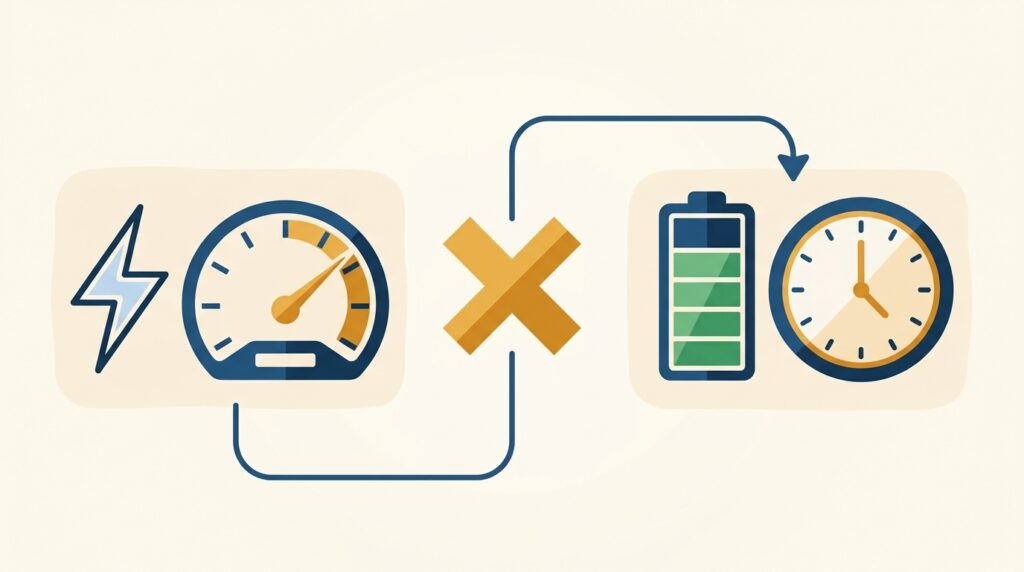
- Watts (W) measure power at one moment. A panel’s rating, such as 400 W, is its output under ideal test conditions.
- Watt-hours (Wh) measure energy over time. Power (W) × hours = energy (Wh).
- Kilowatt-hours (kWh) are watt-hours ÷ 1,000. This is the unit on an electricity bill.
If you want the basics first, read our Solar Basics guide.
The Solar Panel Energy Output Formula
Daily Wh = panel watts × peak sun hours × 0.8
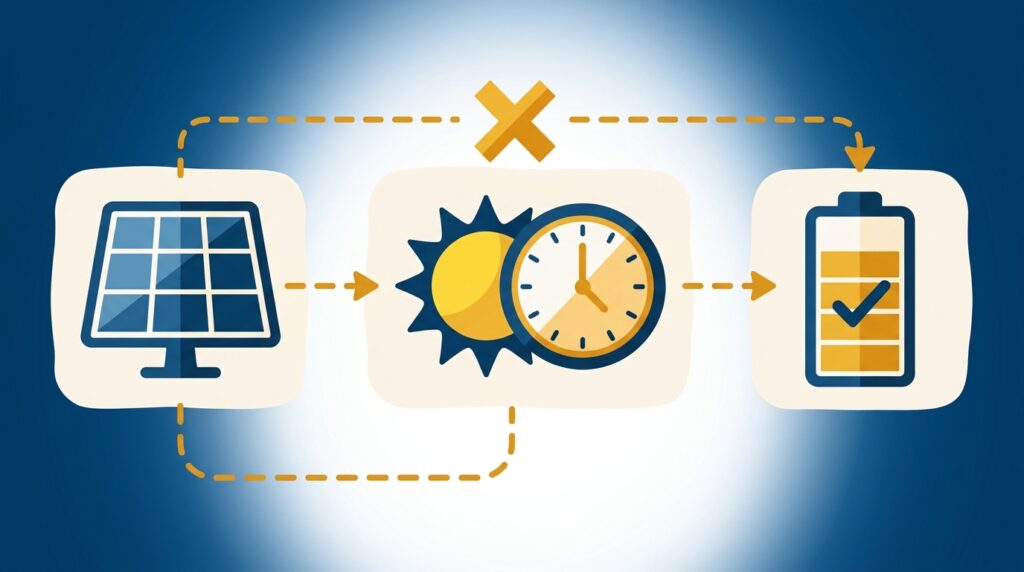
- Panel watts: the total rated watts of all your panels.
- Peak sun hours: the number of hours per day with full-strength sunlight (1,000 W/m²). It is not the same as daylight hours. Most places fall roughly between 3 and 6 peak sun hours, depending on location and season.
- 0.8: a safety factor for real-world losses (heat, wiring, dust, charge controller, angle).
To find peak sun hours for your location, use a free tool such as NREL’s PVWatts calculator.
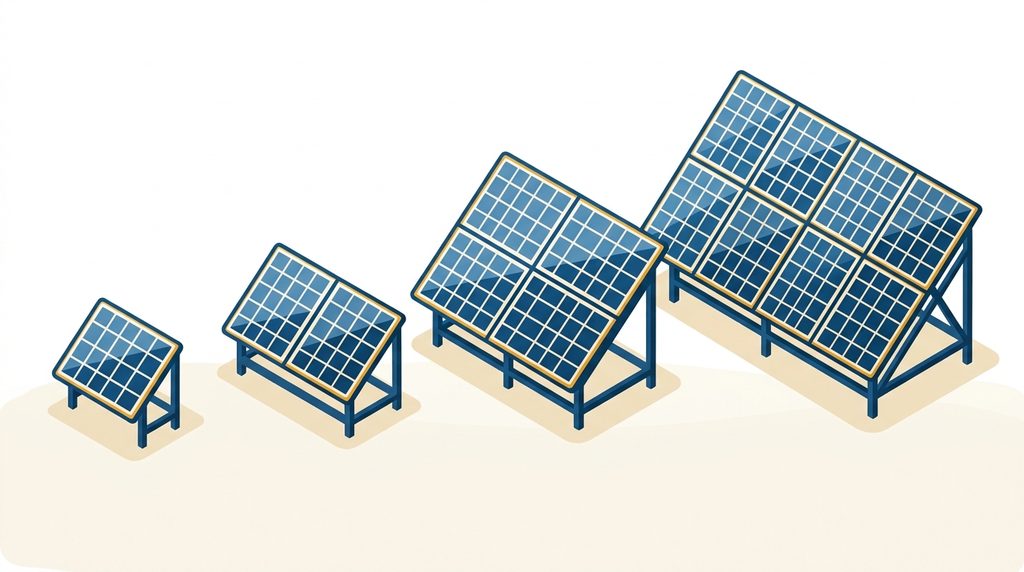
4 Examples of Solar Panel Energy Production
These examples use 4 peak sun hours and the 0.8 factor.
| Panel size | Daily energy | Monthly (30 days) | Yearly (365 days) |
|---|---|---|---|
| 100 W | 320 Wh (0.32 kWh) | 9.6 kWh | 117 kWh |
| 200 W | 640 Wh (0.64 kWh) | 19.2 kWh | 234 kWh |
| 400 W | 1,280 Wh (1.28 kWh) | 38.4 kWh | 467 kWh |
| 800 W | 2,560 Wh (2.56 kWh) | 76.8 kWh | 934 kWh |
Change the peak sun hours to match your location. With 5 peak sun hours, multiply the results by 1.25. With 3 peak sun hours, multiply them by 0.75.
What Changes Solar Panel Energy Output?
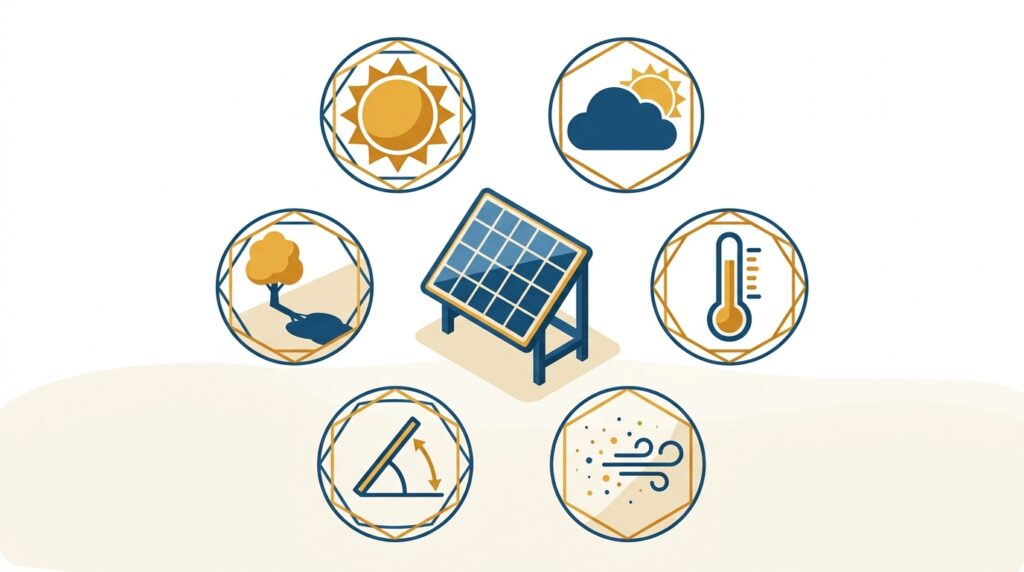
- Sunlight and season: winter days give fewer peak sun hours than summer days.
- Shade: even a small shadow on one panel can cut the output of a whole string.
- Temperature: panels lose some efficiency when they get hot.
- Angle and direction: panels perform best when they face the sun directly.
- Dirt and dust: a dirty surface blocks light.
- Wiring and equipment: thin cables, long runs and a weak charge controller waste energy.
- Panel age: output falls slowly over the years. Check the manufacturer’s degradation figure on the datasheet.
How Many Solar Panels Do You Need?
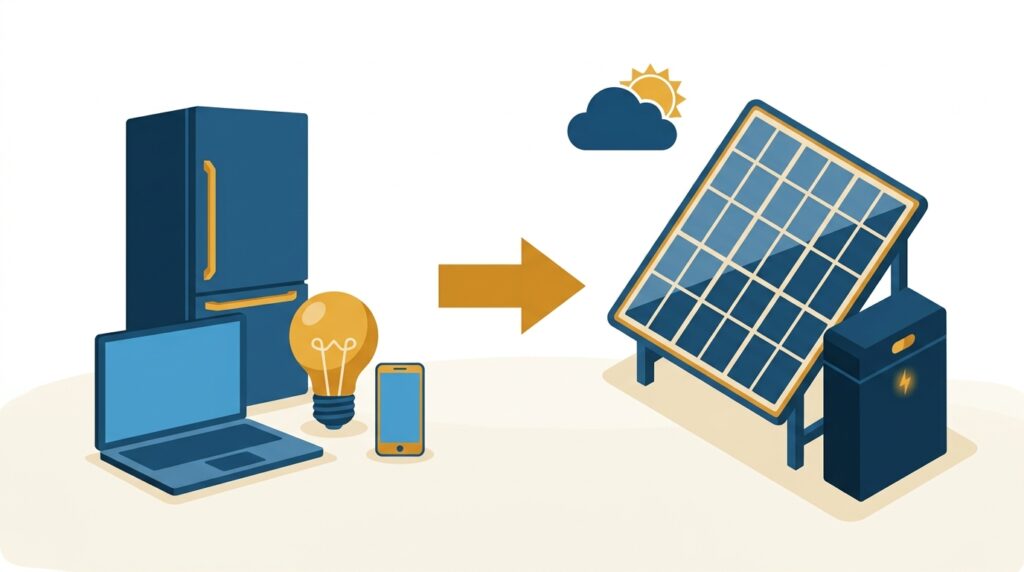
Turn the formula around:
Panel watts needed = daily Wh ÷ peak sun hours ÷ 0.8
Example: you use 1,200 Wh per day and have 4 peak sun hours. 1,200 ÷ 4 ÷ 0.8 = 375 W of panels.
You can skip the math with our Appliance Load Calculator. Add your appliances and it gives you panel watts, battery size and inverter size.
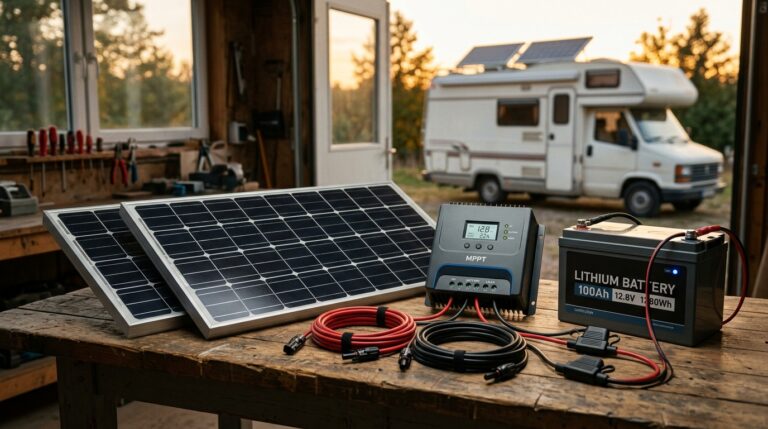
Building for a van or motorhome? See our RV solar kit guide for what to check before you buy.
FAQ
How much energy does a 400 W solar panel produce per day?
About 1.28 kWh per day with 4 peak sun hours. That is 400 W × 4 × 0.8.
How much energy does a solar panel produce per year?
Multiply the daily figure by 365. A 400 W setup at 4 peak sun hours produces about 467 kWh per year.
Do solar panels produce energy on cloudy days?
Yes, but less. Output can drop sharply under heavy cloud. Size your system with a safety margin and a battery if you need steady power.
What is the difference between watts and kWh in solar?
Watts measure power at a moment. kWh measure energy over time. A 400 W panel running at full power for one hour produces 0.4 kWh.
These figures are estimates for general education. Real output depends on your location, equipment and installation.
3. Image à la une
how-much-energy-can-solar-panels-produce.webp4. Liens internes
| De cet article | Vers | Ancre |
|---|---|---|
| Section formule | /solar-basics/ |
Solar Basics guide |
| Section « How many panels » | /sizing-calculators/ |
Appliance Load Calculator |
| Fin de section | article RV Solar Kit Guide | RV solar kit guide |