ICE Vehicle Sales Crash 49% While EV Share Jumps to 67%: China EV Sales Report for September
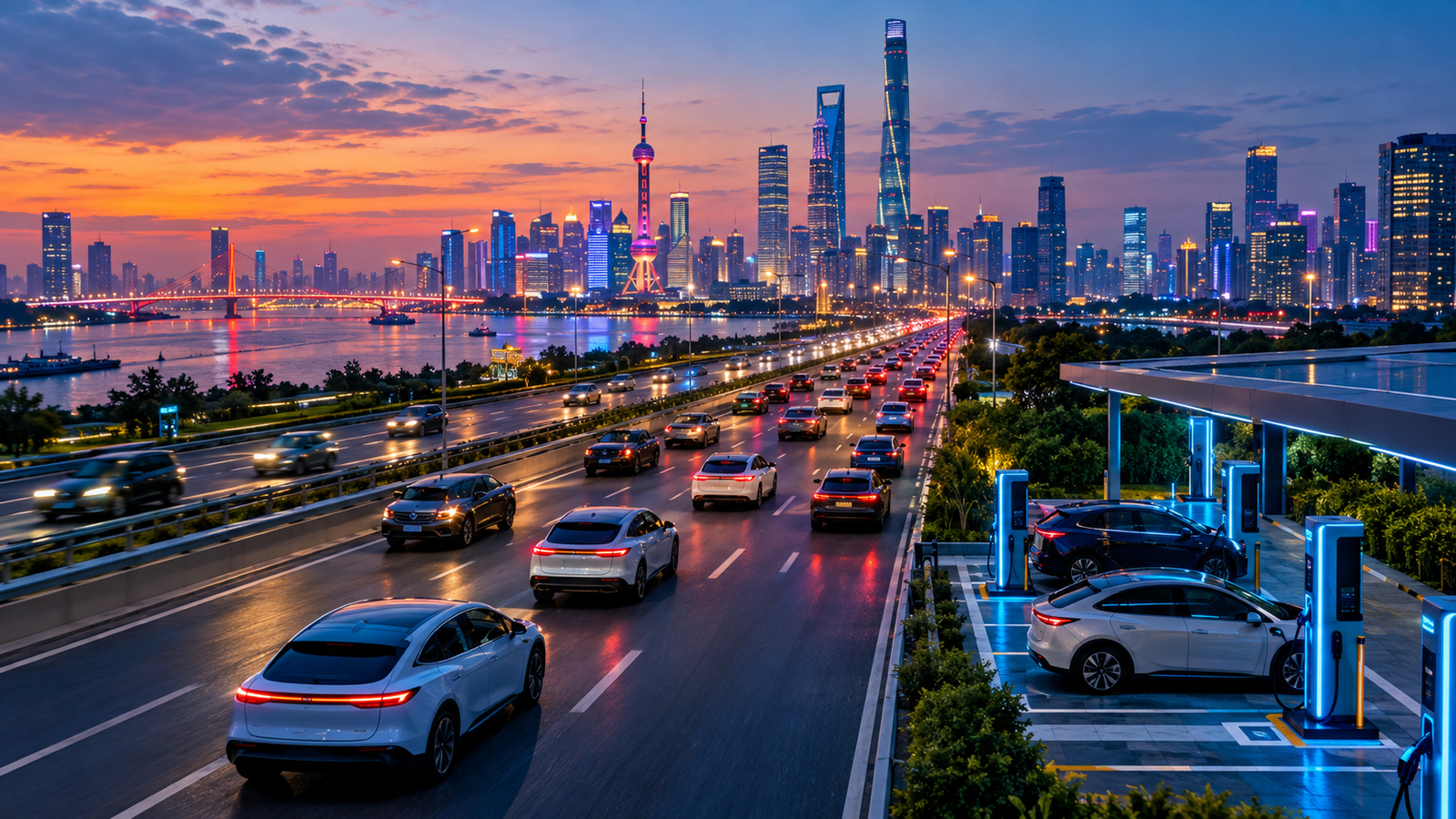
China’s car market hit a milestone in September 2026. According to the China Passenger Car Association (CPCA), new energy vehicles (NEVs) took a record 67.0% of passenger car retail sales, while retail sales of conventional gasoline cars fell 49% from a year earlier. This monthly update breaks down the numbers, the best-selling models, the leading manufacturers, and what the shift means going forward.
An important detail: the 49% drop applies to conventional gasoline vehicles, meaning non-hybrid cars. All gasoline-powered vehicles, including conventional hybrids, fell 43%, because conventional hybrids actually grew 25%. And while EV share jumped, domestic EV retail sales did not grow. Both points are explained below.
China EV Sales and Key Market Trends
- NEV retail sales: 1.084 million vehicles, down 16.7% year on year (the ninth straight monthly decline) but up 7.8% from August.
- NEV market share: a record 67.0%, up 9.1 percentage points from a year earlier and 1.7 points from August.
- Total passenger car retail: 1.618 million, down 28.0% year on year.
- NEV wholesale: 1.666 million, up 11.3% year on year, with wholesale share at a record 65.4%.
- NEV exports: 558,000, up 163.5% year on year, and 60.8% of all passenger vehicle exports.
- First nine months: NEV retail totaled 7.758 million, down 12.8%.
By powertrain, battery electric vehicles (BEVs) held up best, with retail sales of 765,000 (down 7.4%). Plug-in hybrids fell 35.6% to 232,000, and extended-range EVs fell 19.3% to 88,000. In wholesale, BEVs were the only category that grew, up 18.3% to 1.126 million.
Why ICE Vehicle Sales Declined
The CPCA pointed to several causes behind the weak September market:
- High oil prices: They continue to push buyers away from gasoline vehicles and toward NEVs, and the CPCA expects this to accelerate the shift.
- A high comparison base: Last September, buyers rushed to purchase before subsidies expired in some provinces.
- Holiday timing: The Mid-Autumn Festival fell in late September, and sales weakened noticeably that week.
- Supply pressure: Surging memory and chip prices and shortages slowed the sales contribution from new NEV models.
- Subsidy changes: Domestic small electric cars in the A00 segment dropped sharply because of less favorable subsidy policies.
The result is a market where overall demand is shrinking, gasoline cars are shrinking fastest, and EVs are losing less ground. That is why NEV share climbs even as NEV retail volumes decline.
Best-Selling Electric Vehicles
The Tesla Model Y was China’s best-selling passenger vehicle of any fuel type in September, with 50,359 retail sales. It benefited from a RMB 10,000 cash incentive on inventory vehicles that Tesla announced on September 7, and from production prioritized for China at quarter end. Chinese-brand models still dominate below the premium level, especially under RMB 200,000.
Top EV Models and Rankings
- Tesla Model Y: 50,359 units, the highest-priced model in the top 10.
- Geely Galaxy Xingyuan: 44,275 units. It was also the best-selling NEV in China for all of 2025, with about 466,000 retail sales.
- BYD Yuan UP: 22,767 units, a regular in the top 10 thanks to its price below RMB 100,000.
- Tesla Model 3: 14,478 units, also in the top 10.
In the NEV SUV ranking, the ten best sellers had combined retail sales of 210,557 units, up about 6.3% from August. The XPeng MONA L03 broke into the top 10, while the Xiaomi YU7 dropped out.
Leading EV Manufacturers
| Rank | Manufacturer | September NEV retail sales |
|---|---|---|
| 1 | BYD | 246,816 |
| 2 | Geely Auto | 119,682 |
| 3 | Leapmotor | 78,202 |
| 4 | Tesla China | 64,837 |
| 5 | Changan Automobile | 61,732 |
| 6 | SAIC-GM-Wuling | 54,810 |
| 7 | Chery | 46,860 |
| 8 | SAIC Passenger Vehicle | 40,280 |
| 9 | Xiaomi | 40,015 |
| 10 | HIMA (Huawei-backed) | 37,490 |
BYD led with about 22.8% of NEV retail sales. Tesla rose to fourth place with a 6.0% share. Nio (37,231), GWM, Li Auto (31,817), and XPeng (30,599) followed just outside the top 10, and Li Auto and Nio dropped out of the top 10 compared with August. China’s emerging EV makers held 23.6% of the retail market, up 3.4 points, driven mainly by Leapmotor and Nio.
EV Market Share and Growth
The record 67.0% share varies sharply by brand type:
- Domestic Chinese brands: 84.5% NEV share, though their NEV retail sales fell 19% year on year.
- Luxury brands: 44.9% share, with NEV retail sales down 8%.
- Mainstream joint-venture brands: only 15.9% share, but their NEV retail sales rose 36%.
So while Chinese brands have nearly completed the switch, foreign joint ventures are only beginning it, which suggests the headline share still has room to rise. Growth is now coming from exports and wholesale rather than the domestic retail market.
What These Numbers Mean for the Future
- The ICE decline is structural: With oil prices high and EV share at two-thirds, conventional gasoline cars are losing their place, especially in cities.
- Exports are the growth engine: NEV exports more than doubled from a year ago, which will intensify competition for global automakers.
- Hybrids are a bright spot among gasoline cars: Conventional hybrids grew 25%, showing that buyers still want a bridge technology.
- Domestic demand is the weak spot: Total retail sales fell 28%, and the market is waiting on trade-in subsidies expected to ramp up later in the year.
- Outlook: The CPCA expects NEV share to stay above 65% in October, helped by more selling days after the holiday.
Frequently Asked Questions
What was China’s EV market share in September 2026?
New energy vehicles accounted for a record 67.0% of passenger vehicle retail sales in China in September 2026, up 9.1 percentage points from a year earlier, according to the China Passenger Car Association (CPCA).
Did gasoline car sales really fall 49% in China?
Retail sales of conventional gasoline vehicles, meaning non-hybrid gasoline cars, fell 49% year on year in September 2026, according to the CPCA. All gasoline-powered vehicles, including conventional hybrids, fell 43%.
Were EV sales in China up or down in September 2026?
NEV retail sales were 1.084 million, down 16.7% year on year but up 7.8% from August. NEV wholesale sales rose 11.3% to 1.666 million, and NEV exports jumped 163.5% to 558,000.
What was the best-selling car in China in September 2026?
The Tesla Model Y, with 50,359 retail sales, was China’s best-selling passenger vehicle of any fuel type in September 2026, ahead of the Geely Galaxy Xingyuan at 44,275.
Data source: China Passenger Car Association (CPCA) monthly release for September 2026, as reported by CnEVPost and other industry outlets. Figures are preliminary and may be revised.
Explore our electric vehicles archive for more reports.