RV Battery Water Damage: How to Protect Lead-Acid and LiFePO4 Battery Banks
By a working solar technician · Batteries & Inverters · 9 min read
Water is one of the most overlooked threats to a solar battery bank. In an RV, camper van or off-grid system, moisture silently attacks your batteries. RV battery water damage speeds up terminal corrosion, weakens connections and creates conductive paths that cause current leaks or short circuits. Over time you see capacity loss, odd charging behavior and early battery failure.
One early warning sign is an unexpectedly low voltage reading. A 12V lead-acid bank sitting at 10.8V points to a deep discharge, a dead cell or an electrical fault. Water does not drop voltage instantly, but the corrosion and stray currents it causes make existing problems much worse.
This guide covers how water gets into battery compartments, how to waterproof and drain them, what to do with a wet battery, and how LiFePO4 water resistance differs from lead-acid.
Common causes of battery compartment flooding
Water can get into a battery compartment even when it looks well installed. It enters through poor vents, worn seals or unsealed cable holes, and without an exit it pools around the battery base and wiring.
1. Poorly sealed battery boxes and covers
Loose lids, worn gaskets, cracked housings and old weatherstripping let rain in, especially during heavy storms and highway spray. Water can also travel along roof seams and wall channels before it settles in the box.
2. Missing or blocked drainage holes
Many enclosures allow a little splash through required vents. The real damage starts when that water has no way out. Standing water keeps battery cases, wiring and terminals submerged.
3. Badly placed ventilation openings
Flooded lead-acid batteries release explosive hydrogen while charging, so they need ventilation. But a vent placed under a rain path or in tire spray works like a funnel. A good enclosure balances airflow, splash protection and drainage.
4. Heavy rain, road spray and humidity
At highway speed, wet roads push pressurized spray into tiny gaps. In humid climates, temperature swings create condensation inside cool enclosures, which slowly corrodes terminals and causes intermittent faults.
Waterproofing and drainage fixes for a battery compartment
A standard plastic battery box is not enough. A few smart changes greatly reduce the risk of short circuits and corrosion.
Install proper drainage holes
- Find the lowest points of the enclosure, where water collects.
- Drill small, clean drain holes near the bottom outer corners of plastic boxes.
- Test with plain water (batteries removed) to make sure the water does not run onto chassis wiring, frame parts or the vehicle interior.
Seal vulnerable entry points
- Replace brittle or flattened gaskets with dense weatherstripping.
- Use marine-grade silicone or polyurethane sealant that suits your box material around cable entries.
- Use liquid-tight cable glands where cables pass through the enclosure walls.
Raise the battery box off the floor
Water often collects under boxes that sit flat on a compartment floor or trailer tongue. A corrosion-resistant, non-conductive riser lets air circulate and keeps the base dry. Make sure it supports the full weight of the bank, resists road vibration and is firmly secured.
Does water damage LiFePO4 batteries?
LiFePO4 batteries are sealed and do not vent hydrogen like flooded lead-acid batteries, so they are generally less affected by splashes. But sealed does not mean waterproof.
- Check the IP rating on the datasheet. Some LiFePO4 batteries carry a water-resistance rating, many do not, and a rating covers the battery body only.
- Terminals, busbars and BMS wiring still corrode and can short when wet.
- Never submerge a lithium battery. If one has been underwater, do not charge or use it. Disconnect it only if that is safe, and contact the manufacturer or a certified technician.
- Mount it high and dry, keep terminals covered with insulating boots, and use the same sealing and drainage steps as above.
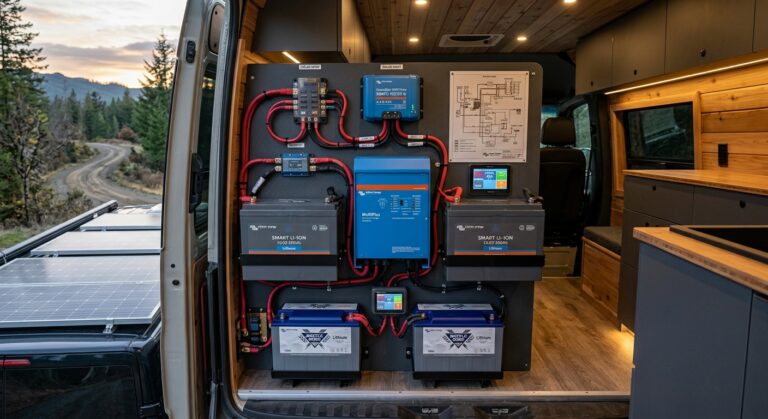
Choosing a battery for a van? See what a professional camper van power system includes.
Pre-inspection checklist for a wet battery compartment
- Seal check: look for cracks or water tracks on lids, gaskets and cable glands.
- Drainage audit: make sure drain holes are clear of dirt, leaves and debris.
- Mounting: the enclosure is firmly fastened and raised off wet surfaces.
- Ventilation: gas vent channels are completely open.
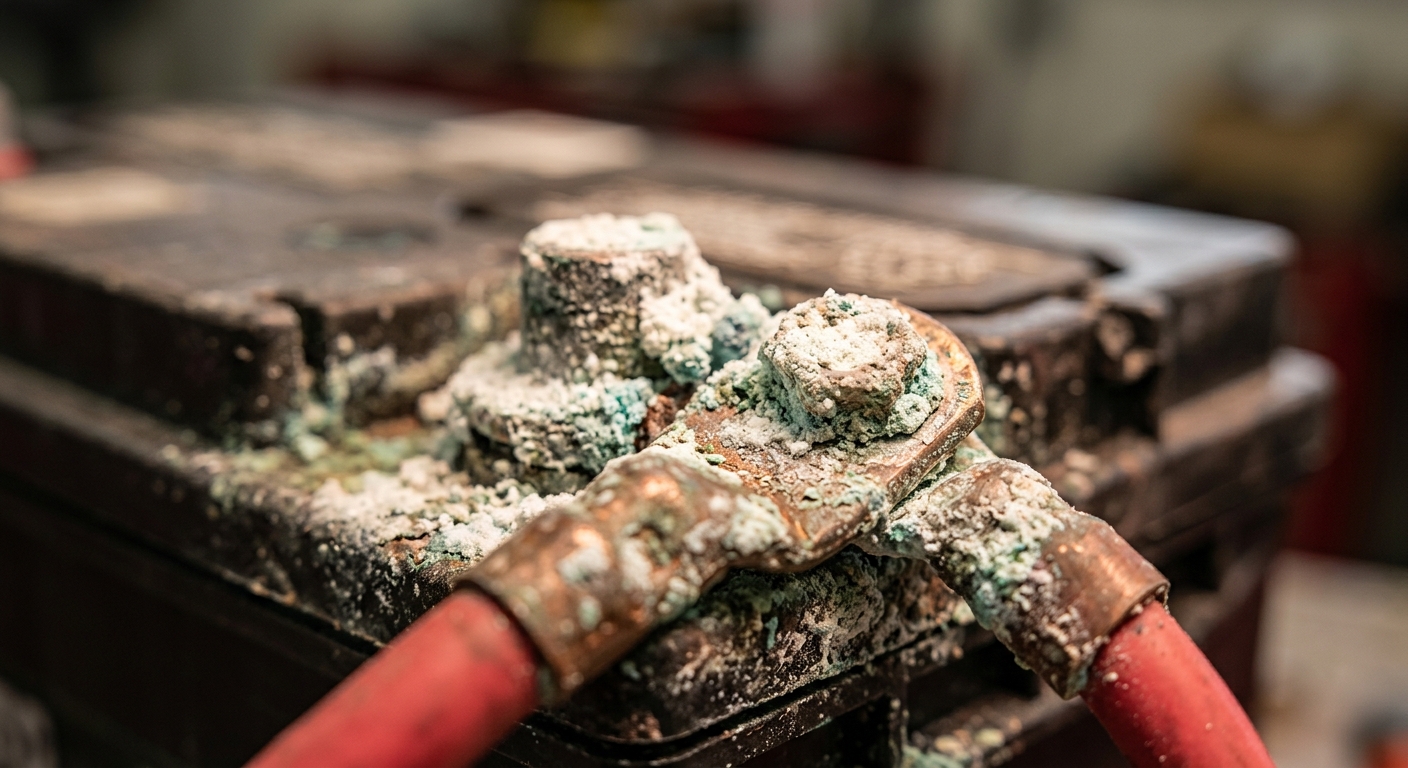
- Corrosion: look for white, green or blue deposits on terminals and busbars.
Can a flooded lead-acid battery be saved?
A flooded lead-acid battery may be saved if water only reached the outer compartment and did not break the casing or contaminate the electrolyte. If it is simply discharged, a good multi-stage smart charger can often restore it, provided it passes a physical inspection.
Lead-acid recovery steps
- Identify the battery type. Confirm it is an open-vented flooded battery and read the manufacturer's charging specs.
- Check electrolyte levels. If low, top up with distilled water only. Never add battery acid during routine maintenance.
- Use a suitable smart charger with lead-acid settings that match your system voltage. Use reconditioning or desulfation modes only if the manufacturer allows it.
- Charge in a safe area. Choose a ventilated space away from sparks and flames, and watch for heat, swelling or gas odor.
- Do a load test. Resting voltage alone does not prove battery health. Use a calibrated capacity or carbon-pile load test after charging.
Warning signs: replace the battery immediately
Trying to revive a badly damaged battery is a chemical and fire risk. Replace it if you see any of these:
- Cracked or leaking case: leaking electrolyte (H₂SO₄) causes chemical burns, fast corrosion and fires.
- Swollen or bulging case: a sign of internal shorts, severe grid corrosion or overheating.
- Heat or a rotten-egg smell while charging: excess heat or H₂S gas points to an internal short. Disconnect power right away.
- Low voltage under load: if a lead-acid battery cannot hold about 12.0V after a full smart-charge cycle and a rest, a cell has likely failed.
- Damaged internal posts or terminals: corroded external threads can be cleaned, but loose or melted posts make the battery unsafe.
- Water inside the cells: if flood water or dirty runoff entered the cell vents, the electrolyte is ruined and the battery needs safe disposal.
FAQ
Can rain damage an RV battery?
Yes. Rain and road spray can corrode terminals, damage wiring and cause short circuits, especially when the battery box has no drainage or the seals are worn.
Are LiFePO4 batteries waterproof?
Not automatically. Check the IP rating on the datasheet. Even a rated battery can have exposed terminals and wiring that corrode when wet, and no lithium battery should be submerged.
Should a battery box have drain holes?
Often yes, because water that gets in needs a way out. Follow the manufacturer's guidance, never drill into sealed or liquid-tight boxes, and never block the vents of flooded lead-acid batteries.
Can I use a battery that got wet?
If only the outside got wet and the case is intact, dry it, clean the terminals and inspect it. If it was submerged or water entered the cells, do not charge it and have a technician check it.
Next steps
Planning a new setup? Browse our RV and van solar kits and budget builds, and use our camper van solar simulator to size your system.
Battery and electrical work can be dangerous. Follow the manufacturer's instructions and local codes, and hire a qualified professional when unsure.