Farms have big roofs, open land and steady daytime loads, which makes them natural candidates for solar. But two federal programs that farmers relied on for years changed in 2025 and 2026: the USDA’s Rural Energy for America Program (REAP) and the commercial solar tax credit. If you are reading older guides, much of what they say about grants and deadlines no longer applies. This guide covers what farm solar costs today, what the new rules mean, and how to decide whether a project makes sense for your operation.
Quick answer
- Cost: Berkeley Lab’s latest data put the median installed price of small non-residential systems (100 kW or less) at about $3.2 per watt and larger systems (100 kW–5 MW) at about $2.4 per watt, before incentives (2024 installations).
- USDA REAP: As of November 2026, USDA is not accepting REAP grant applications. A rule effective October 16, 2026 moves REAP grants to a post-completion model and makes ground-mounted solar on cropland ineligible.
- Tax credit: The Section 48E credit is still available for farm businesses, but solar projects that did not begin construction by July 4, 2026 must be placed in service by December 31, 2027. Systems under 1 MW AC can still receive the 30% rate.
How farms use solar power
Farm solar is not one product. The right design depends on where your electricity goes. University of Maryland Extension lists common farm solar applications such as:
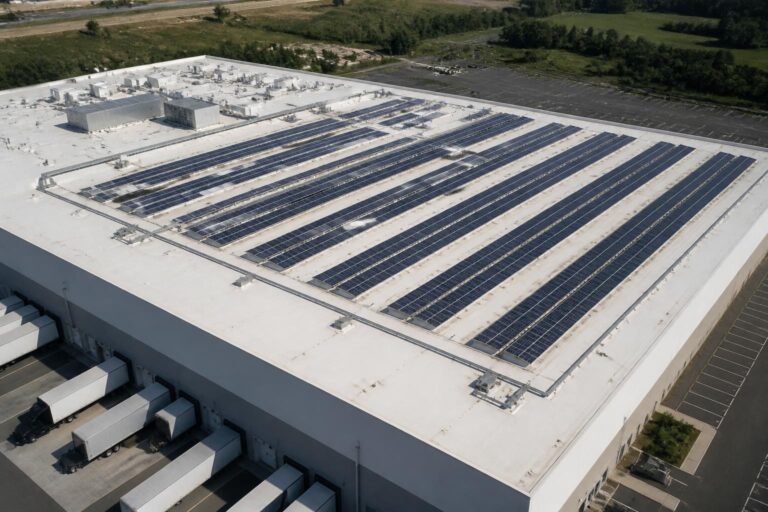
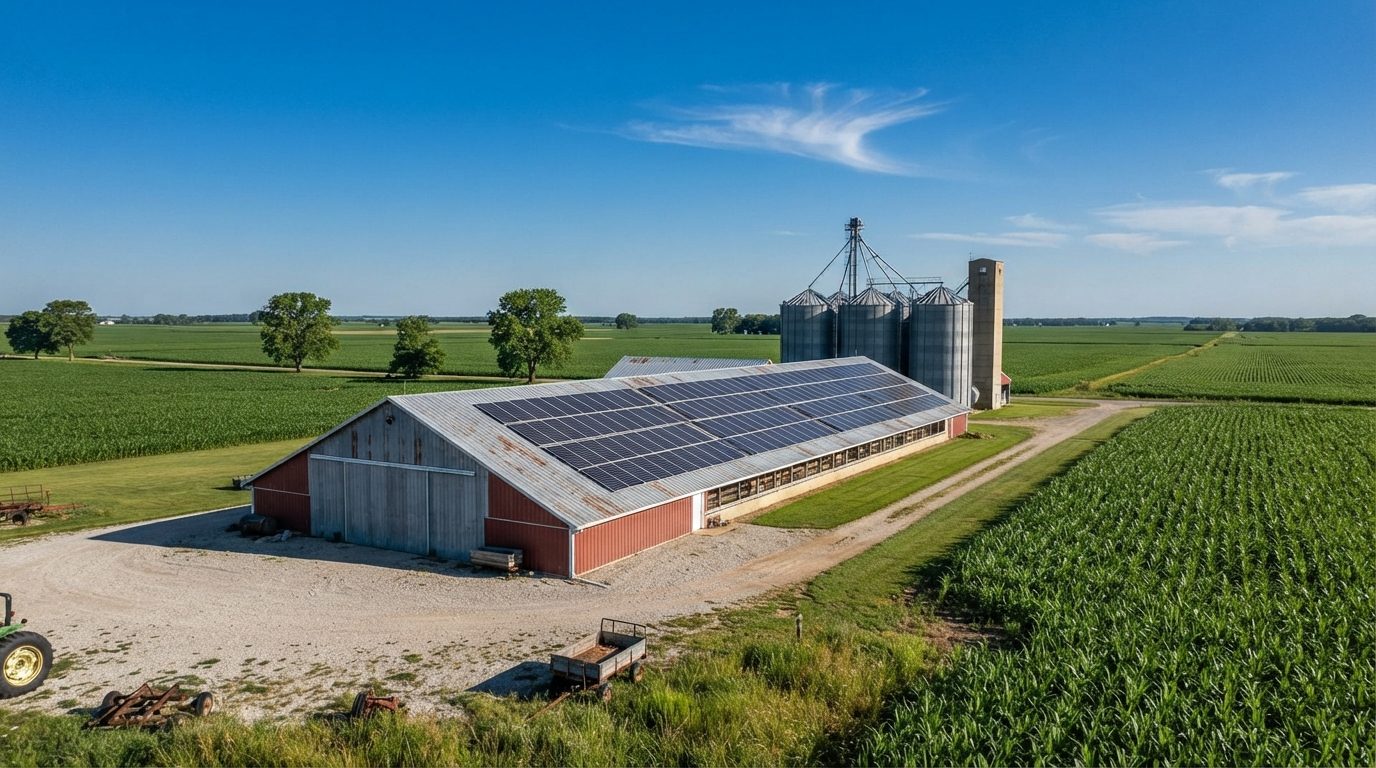
- Rooftop systems on poultry houses, dairy barns, machine sheds and workshops, offsetting ventilation, lighting, milking and cooling loads.
- Remote well and irrigation pumping, where running a new utility line can cost more than a stand-alone solar pump.
- Electric fencing and mobile livestock watering, typically small off-grid systems with batteries.
- Ground-mounted arrays on non-crop land, field edges or pasture. UMD estimates 5–8 acres per megawatt for ground-mount systems.
Before you get quotes, pull 12 months of bills for every meter on the farm. Many farms have several service accounts (house, shop, barns, pumps), and the best solar location may not be next to the biggest load. Whether you can combine accounts depends on your state’s meter aggregation rules, covered below.
How much does farm solar cost?
| System segment | Median installed price (before incentives) | Typical farm fit |
|---|---|---|
| Small non-residential, ≤100 kW | About $3.2/W | Barn and shop roofs, small dairies, single pumps |
| Large non-residential, 100 kW–5 MW | About $2.4/W | Large poultry or dairy operations, ground-mount arrays |
| Residential (for comparison) | About $4.0/W | Farmhouse |
As a rough illustration (our calculation, not a quote): a 50 kW barn-roof system at $3.2/W would cost about $160,000 before incentives. Actual prices depend on roof condition, distance to the service panel, trenching, utility interconnection costs and whether a tracker or battery is added. Tariffs and new federal sourcing rules have also put upward pressure on module prices in 2026, so get recent written quotes.
USDA REAP in 2026: what changed
REAP has long helped agricultural producers and rural small businesses fund renewable energy and efficiency projects. According to USDA Rural Development (page updated October 28, 2026):
- USDA states that it “is not accepting REAP grant applications at this time.” A future funding notice will set the next window.
- Guaranteed loan applications are still accepted.
- Grants cover up to 25% of total project cost, with a combined grant and loan guarantee limit of 75%.
- Renewable energy system grants range from $1,500 to $500,000.
The bigger change is a final rule published October 1, 2026 and effective October 16, 2026. Key points:
- Post-completion grants: Projects must be completed before applying (generally 12–24 months before, with a longer window for the first round) and applicants submit 12 months of actual production or savings data. In practice, you must finance the whole project first.
- No ground-mount solar on cropland: Ground-mounted solar PV and wind on certified cropland are ineligible. Rooftop systems and arrays on non-cropland are not excluded by this provision.
- Foreign adversary components: Solar and wind projects with components from a “foreign adversary” country are ineligible, with an exemption for projects completed before the rule was published.
- One award per fiscal year per applicant, and a site ownership or lease requirement of at least 12 months.
What to do: If you were counting on a REAP grant, talk to your USDA Rural Development state energy coordinator before you build, and keep careful documentation of equipment origin, costs and production. Do not sign a contract that assumes a grant.
Federal tax credits and depreciation for farm solar
A farm operated as a business can generally use the commercial Clean Electricity Investment Credit (Section 48E). Under the One Big Beautiful Bill Act, as summarized by the IRS, 26 U.S.C. §48E and SEIA:
- Rate: The base credit is 6%, increased to 30% when prevailing wage and apprenticeship rules are met. Facilities under 1 MW AC qualify for the 30% rate without those labor requirements, which covers most farm projects.
- Bonuses: Domestic content and energy community bonuses can add up to 10 percentage points each when requirements are met.
- Deadline: The window to begin construction by July 4, 2026 has closed. Solar projects starting after that date must be placed in service by December 31, 2027 to qualify. Battery storage is not subject to that 2027 cutoff.
- Foreign entity rules: Projects that begin construction after December 31, 2025 cannot include “material assistance” from a prohibited foreign entity beyond set thresholds. Ask your installer for supply-chain documentation.
- Depreciation: 100% bonus depreciation was made permanent for qualifying property acquired after January 19, 2025 (Eide Bailly). Recovery period treatment for solar property should be confirmed with your tax adviser.
For a deeper look at deadlines and “begin construction” rules, read our commercial solar tax credit guide. The homeowner credit (Section 25D) ended after 2025, so a farmhouse-only system that is not business property generally won’t qualify for a federal credit.
Net metering and multiple meters
How your utility credits exported solar can make or break farm economics, and the rules are set state by state. Rural electric cooperatives and municipal utilities are often exempt from state net metering mandates, which matters because many farms are served by co-ops. Some states allow agricultural customers to aggregate meters: for example, the Farm and Energy Initiative describes Virginia, Maryland and Connecticut provisions. Check current rules on DSIRE and ask your utility for its interconnection and export tariff in writing.
Agrivoltaics: solar and farming on the same land
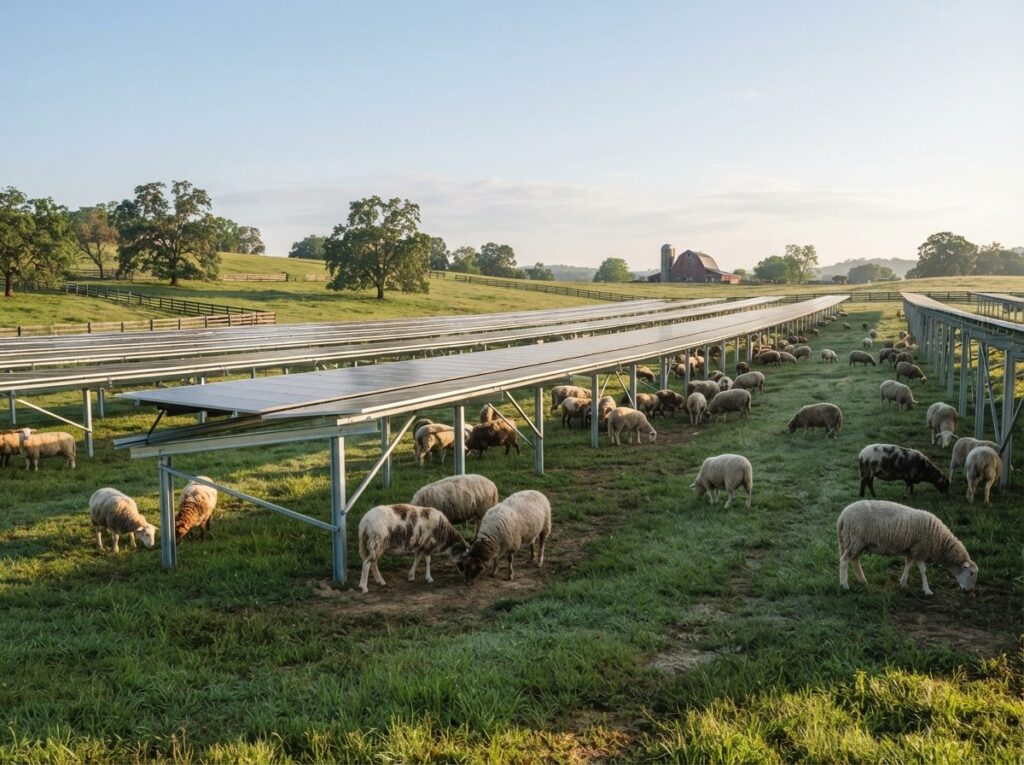
Agrivoltaics means growing crops or grazing animals under or between solar panels. The DOE-funded InSPIRE project, which DOE calls the largest and longest-running agrivoltaics research effort in the world, has supported research at 28 sites in 11 states plus Puerto Rico and Washington, D.C. Its findings highlight “5 Cs” for success: climate and soil, configuration, crop selection, compatibility and collaboration (DOE). Sheep grazing is a common fit; cattle tend to damage panels and wiring, and full-sun crops like wheat are usually poor candidates (UMD Extension).
Pros and cons of solar for farms
| Pros | Cons |
|---|---|
| Large roofs and daytime loads match solar production | REAP grants are paused and now paid only after completion |
| 30% federal credit still available for systems under 1 MW placed in service by end of 2027 | Tight 2027 deadline and new foreign-sourcing rules |
| Bonus depreciation improves after-tax economics | Co-op and municipal utilities may offer weak export credits |
| Solar pumping can avoid costly line extensions | Ground-mount on cropland is excluded from REAP and uses productive land |
Farm solar FAQ
Can I still get a USDA grant for solar on my farm?
Not right now. As of November 2026, USDA is not accepting REAP grant applications, and future grants will follow the new post-completion rule. REAP guaranteed loans are still available.
Is it too late to get the 30% solar tax credit for my farm?
Not necessarily. A business-owned system under 1 MW AC can still receive 30% if it meets the placed-in-service deadline of December 31, 2027 (or began construction by July 4, 2026) and the foreign entity rules. Confirm eligibility with a tax professional.
Can solar power my irrigation pumps?
Yes. Solar pumping is common for remote wells and livestock water. For large center-pivot irrigation, grid-tied solar that offsets the pump’s meter, or a hybrid system, is often more practical than off-grid.
How many acres does a solar array need?
University of Maryland Extension estimates roughly 5–8 acres per megawatt for ground-mounted systems. A 100 kW array would need well under an acre.
Can I put solar over a parking area or equipment yard instead?
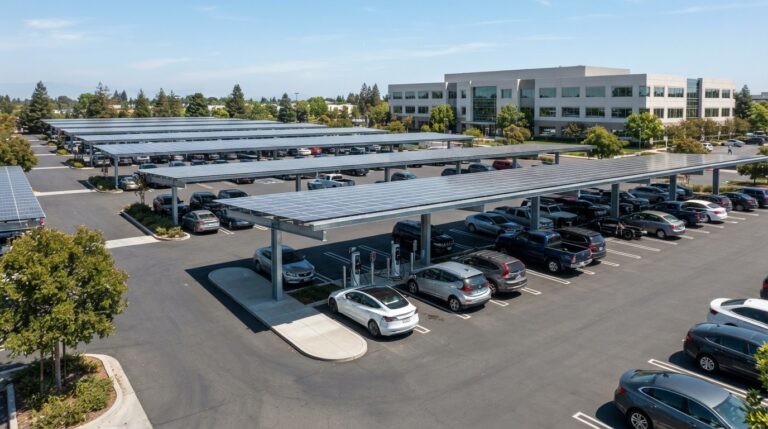
Yes. Canopy structures over equipment yards or parking areas keep land in use and add shade. See our guide to commercial solar carports for costs and code considerations.
Conclusion
Solar can still pay off for many US farms in 2026, especially rooftop systems on barns and poultry houses with steady daytime loads. But the rules have shifted: REAP grants are paused and will only pay after a project is built, cropland ground-mounts are excluded, and the federal credit has a hard December 31, 2027 placed-in-service deadline for new solar projects. Start with your bills and meters, check state net metering on DSIRE, talk to your USDA state office, and work with a licensed installer and a tax adviser before you commit.
Program and tax information is current as of November 2026 and may change. This article is general information, not tax or legal advice.