Solar Energy Advantages and Disadvantages: A Real-World View for Vans, RVs and Off-Grid
By a working solar technician · Solar Basics · 8 min read
Search the web and you will find hundreds of generic lists that squeeze solar power into abstract bullet points. But what does solar actually deliver on a van roof, an RV or an off-grid cabin?
As a hands-on solar technician, I see what works, what fails and what people wish they had known before buying their gear. Here is an honest breakdown of solar energy advantages and disadvantages, based on real installs.
Quick answer
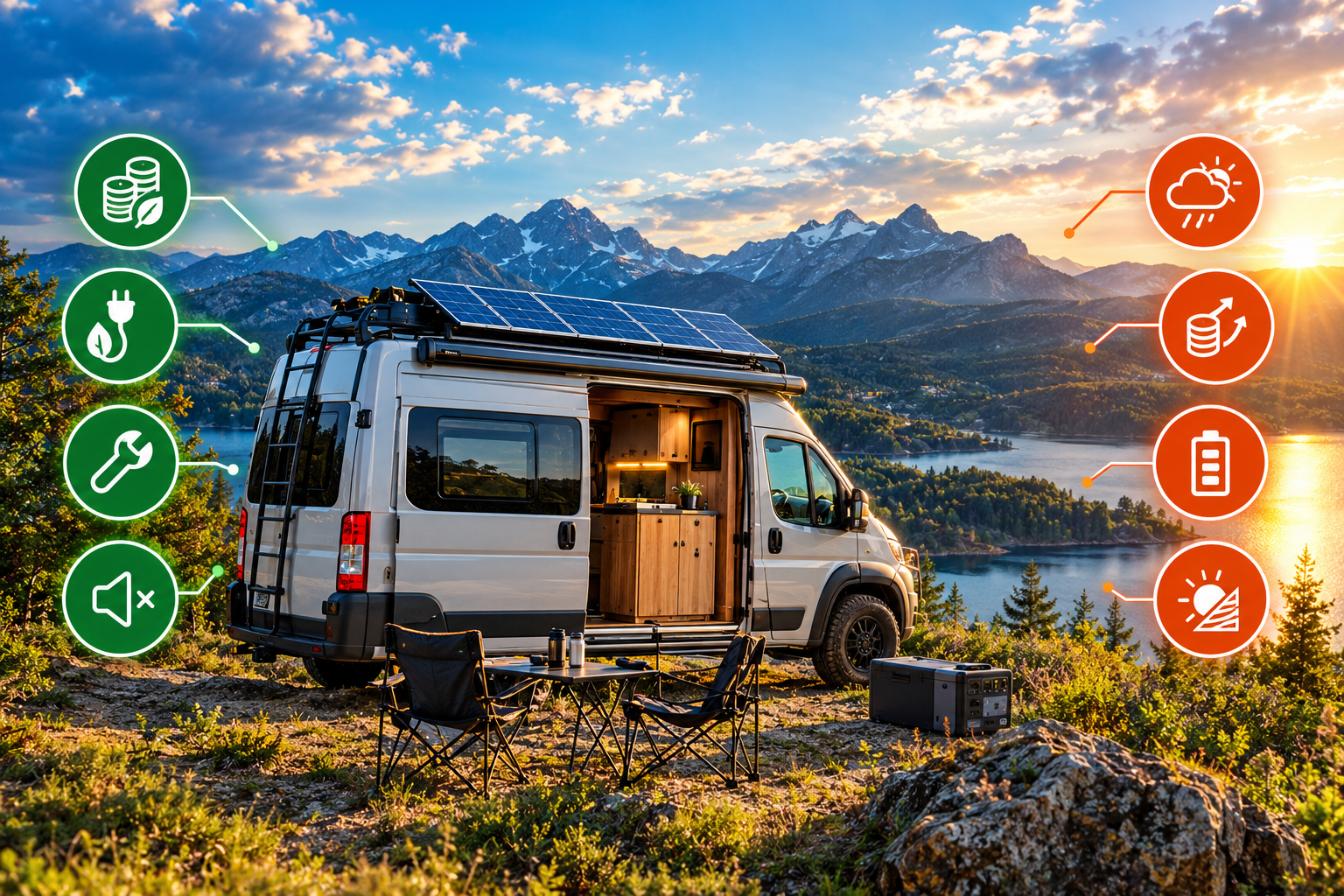
Advantages of solar energy
1. Minimal ongoing operating costs
Once the panels, charge controller and wiring are properly installed, the electricity they produce is essentially free. Unlike a generator, there is no fuel to buy, no oil to change and no engine that wears out after a few hundred hours.
2. True power independence
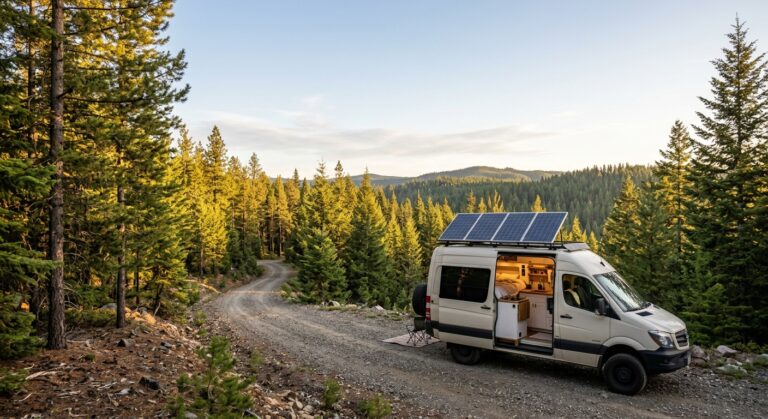
For campers, vans and off-grid setups, solar changes how you live on the road. You no longer plan routes around campgrounds with shore power or worry about draining the starter battery. You can park in remote places for days or weeks and still run the fridge, lights and device charging.
3. Very low maintenance
Photovoltaic (PV) panels have no moving parts. Apart from brushing off dust, leaves or snow now and then, a well-wired system needs little care. Quality panels typically last 25 years or more and are usually warrantied to keep roughly 80% or more of their rated output.
4. Quiet and clean
No noise, no exhaust and no campground rules about generator hours. That matters when you sleep in the same space where you produce your power.
Disadvantages of solar energy
1. Weather and seasonal reliance
Solar output is not constant. Heavy cloud can cut panel production by 60% to 90%, and winter brings shorter days and a lower sun angle. If you rely on solar alone, with no second charging source such as a DC-DC alternator charger or shore power, extended bad weather can leave you without power.
2. Upfront capital cost
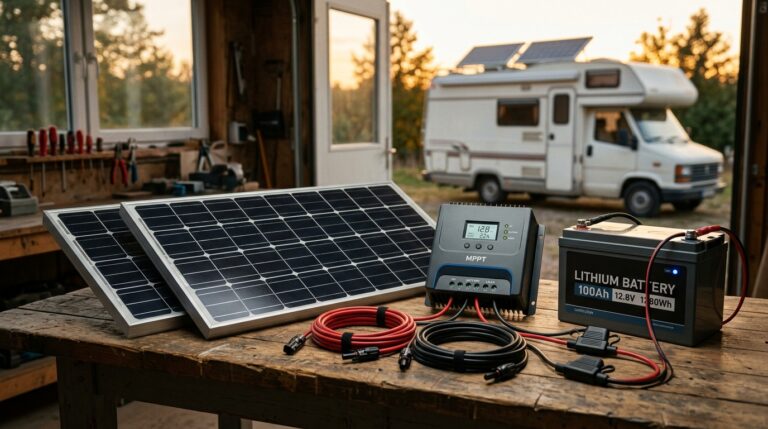
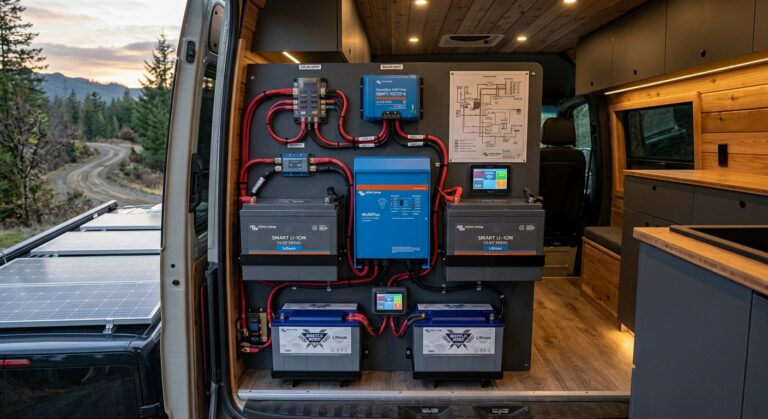
The sunlight is free, but the hardware that captures and stores it is not. A solid off-grid system with quality monocrystalline panels, an MPPT charge controller, fuses, heavy-gauge copper wire and an inverter needs a real investment before you harvest your first watt.
3. Storage cost and complexity
Panels only produce while the sun shines, but you use power all night. Storing it takes a battery bank, ideally LiFePO4 for mobile use. Batteries add weight, need space and are often the biggest single expense of an off-grid build. See our LiFePO4 battery buyer's guide.
What it means for RVs and camper vans
On a vehicle, solar has physical limits that a house roof does not:
- Limited roof space: vent fans, roof racks and air conditioners compete for room. High-efficiency monocrystalline panels give you more power per square foot.
- Shading: on a house, a chimney casts a small shadow. On a van, one roof rack bar or an overhanging branch can drag down a whole array if the panels are not wired correctly.
- Vibration and weather: constant road vibration, wind and rain mean quality mounting brackets, proper cable glands and solid crimped connections matter as much as the electrical specs.
How to reduce the disadvantages
| Disadvantage | What helps |
|---|---|
| Cloudy days and winter | Add a DC-DC alternator charger or shore power as a backup, and size your battery for 2 to 3 days of reserve. |
| Upfront cost | Start with a smaller system sized from your real loads, then expand. See our budget builds and kits. |
| Battery cost and weight | Choose LiFePO4: lighter and longer lasting than lead-acid, so cheaper per cycle. |
| Shading | Plan panel placement around roof obstacles, and ask an installer whether parallel wiring suits your layout, since it often copes better with partial shade. |
| Vibration and weather | Use quality brackets, cable glands and sealant, and fuse every positive run. |
Not sure how much solar you need? Use our camper van solar simulator.
Is solar worth it for you?
| Situation | Is solar worth it? | Technician's take |
|---|---|---|
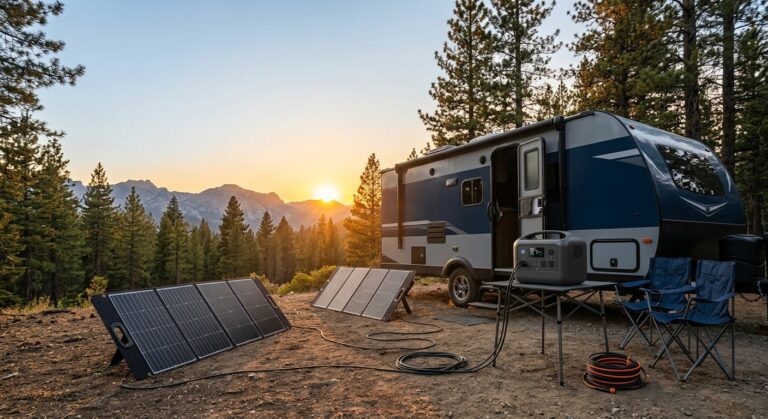
| Weekend campers and hookup users | Usually not | If you stay at campgrounds with shore power, or only go out for a couple of days, a DC-DC charger or a portable power station is often the more cost-effective choice. |
| Full-time vanlifers and boondockers | Essential | If you camp off-grid for weeks, solar can pay for itself by cutting campground fees and generator fuel. |
| Off-grid cabins and remote sheds | Highly recommended | Running utility lines to remote land can cost tens of thousands of dollars, so a standalone solar and battery system is often the cheaper route. |
FAQ
What is the biggest disadvantage of solar energy?
For most people it is the upfront cost of the whole system, especially the battery bank. Solar only produces power while the sun shines, so you need storage for nights and cloudy days.
Do solar panels work on cloudy days?
Yes, but at much lower output. Depending on cloud density, panels typically produce roughly 10% to 40% of their rated power on overcast days.
How many solar panels do I need for a camper van?
Most standard van builds with a 12V fridge, LED lights, a fan and phone and laptop charging do well with 200W to 400W of solar and a 100Ah to 200Ah LiFePO4 battery. Use our simulator to size it for your own loads.
Should I get rigid or flexible solar panels for my RV?
Rigid glass panels are generally better for durability, heat dissipation (thanks to an air gap underneath) and lifespan. Flexible panels suit curved roofs and stealth builds, but they tend to age faster because of heat stress.
Is solar worth it for a camper van?
It is worth it if you camp off-grid for several days at a time. If you mostly stay at campgrounds with hookups, a DC-DC charger or a portable power station is often simpler and cheaper.
Next steps
Ready to plan a system? Read what a professional camper van power system includes, and protect your batteries with our guide on RV battery water damage.
Electrical work can be dangerous. Follow the manufacturer's instructions and local codes, and hire a qualified professional when unsure.