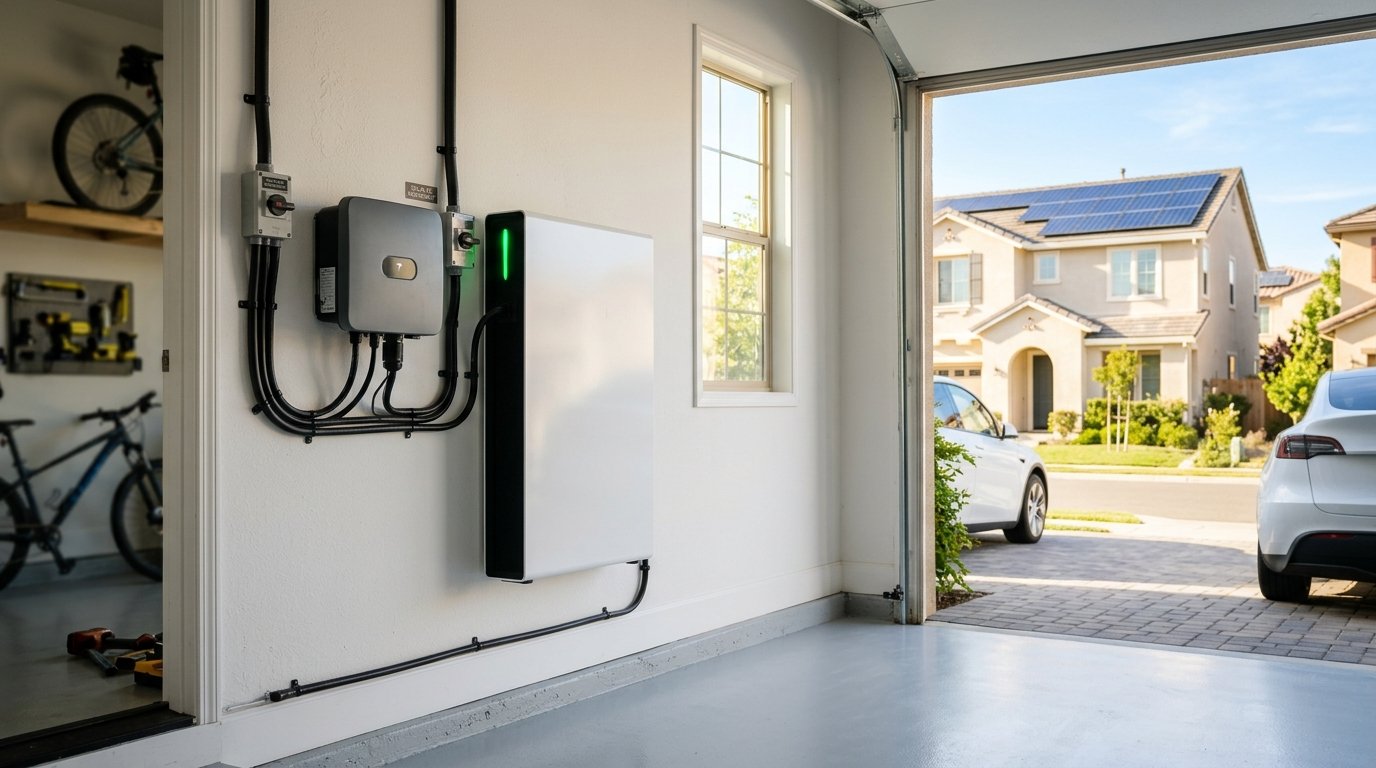
Best Solar Batteries in 2026: Prices, Reviews and Comparison
Choosing among the best solar batteries in 2026 is harder than it used to be. Federal incentives have changed, new models have arrived, and the difference between a good fit and a poor one can mean thousands of dollars. This guide compares the leading brands, explains what batteries cost, and shows you how to match a system to your home. Prices are shown in US dollars and reflect typical US market ranges; costs in your country may differ.
What Is a Solar Battery and How Does It Work?
A solar battery stores electricity from your solar panels, or from the grid, so you can use it later. During the day your panels often produce more power than your home needs. Instead of sending all of that surplus to the grid, the battery stores it and releases it in the evening, overnight, or during an outage.
Most modern home batteries use lithium iron phosphate (LFP) cells, which are stable and long-lasting. An inverter converts the stored direct current (DC) into the alternating current (AC) your appliances use, and built-in software decides when to charge and discharge based on your usage, utility rates, and weather.
Are Solar Batteries Worth It in 2026?
It depends on your electricity rates, your solar setup, and how much you value backup power. A battery is an investment that can pay back through lower bills, but it can also be bought mainly for resilience. Here is how to think about the trade-offs.
Benefits of Solar Battery Storage
- Backup power: Keep essentials such as the refrigerator, lights, router, and medical devices running during an outage, silently and without fuel.
- Higher solar self-consumption: Use more of the energy you generate instead of exporting it.
- Lower peak-rate costs: Discharge during expensive evening hours under time-of-use pricing.
- Protection from export rule changes: If your utility pays little for exported solar, storing it is worth more.
- Possible grid-service income: Some utilities and programs pay for stored energy shared during peak demand.
Disadvantages of Solar Batteries
- High upfront cost: A battery adds thousands of dollars to a project, and the federal credit that once offset it is gone in the US.
- Limited capacity: One battery usually covers essential loads, not an entire home running air conditioning and electric heating.
- Slow payback in some markets: Cheap, flat electricity rates reduce the financial benefit.
- Gradual degradation: Capacity declines over time, and warranties guarantee only a percentage of the original capacity.
- Installation requirements: You need suitable space, permits, and a certified installer.
When a Solar Battery Makes Financial Sense
A battery is most likely to pay off if you have time-of-use rates with a large gap between peak and off-peak prices, low payments for exported solar, frequent or long outages, or generous local incentives. If your power is cheap and reliable and you export at full retail value, the financial case is weaker, and you would be buying mostly peace of mind. Ask installers for a payback estimate based on your actual usage.
Best Solar Battery Brands in 2026
Reviewers often disagree on a single winner because the right choice depends on your inverter, budget, and backup needs. These five brands appear most often in 2026 comparisons. Specifications and prices vary by model, region, and installer, so confirm current details before you buy.
Tesla Solar Batteries
The Tesla Powerwall 3 is the most popular home battery and is frequently ranked first overall. It offers about 13.5 kWh of usable capacity and roughly 11.5 kW of continuous power, which is enough to start large motors and run many loads at once. It includes an integrated solar inverter, so in a new installation it can replace a separate inverter. Tesla backs it with a 10-year warranty, and typical installed prices fall around $9,000 to $16,000 depending on the source and the installer. It delivers the most value when DC-coupled with its built-in inverter.
Enphase Batteries
Enphase makes modular batteries, including the IQ Battery 5P (5 kWh and about 3.84 kW continuous per unit) and the larger IQ Battery 10C. You stack units to match your needs, which gives flexibility and redundancy. The 5P carries a 15-year warranty (or a cycle limit, whichever comes first) and typically costs about $5,000 to $8,000 installed per unit. Enphase is the natural choice if you already have Enphase microinverters, but covering a whole home takes several units, which raises the cost per kWh compared with a single large battery.
SolarEdge Batteries
The SolarEdge Home Battery is designed to work with SolarEdge inverters and optimizers, using a DC-coupled design that can be efficient in a new SolarEdge system. It makes the most sense if your solar array already uses SolarEdge equipment, since compatibility with other brands is limited. Check current availability and warranty terms with a certified installer.
sonnen Batteries
sonnen is a German brand known for premium, long-life LFP systems and strong software, including participation in virtual power plant programs in some markets. It can suit homeowners who value sustainability features and grid-service income, though availability and pricing depend heavily on your region and local installer network.
BYD Battery Systems
BYD’s Battery-Box range is a modular LFP system that pairs with compatible third-party inverters from several brands, which makes it a flexible option when you want a choice of inverter. It is popular in many international markets for its scalability and value. Because it relies on a separate inverter, confirm compatibility and warranty coverage with your installer.
Solar Battery Prices and Installation Costs
Equipment Costs vs. Total Installed Costs
The price on a spec sheet is only part of the cost. Total installed cost includes the battery, the inverter or gateway, wiring, a backup load panel if needed, labor, permits, and sales tax. As a rough guide, installed prices run about $5,000 to $8,000 per 5 kWh modular unit and about $9,000 to $16,000 for a large single battery. Always compare quotes by installed cost per usable kWh, not by equipment price alone.
Factors That Affect Solar Battery Prices
- Usable capacity: More kWh costs more, though larger batteries often cost less per kWh.
- Power output: Higher continuous output usually raises the price.
- System type: Retrofitting a battery onto existing solar can require extra hardware.
- Backup scope: Whole-home backup needs more equipment than essential-loads backup.
- Installer and region: Labor rates, permitting, and competition vary widely.
- Panel upgrades: An older electrical panel may need replacing.
Available Incentives and Rebates
In the United States, the 30% residential clean energy credit (Section 25D) ended for systems placed in service after December 31, 2025, so you should not assume it will reduce your 2026 purchase price. Other options may still exist, including state tax credits, utility rebates and battery programs, and third-party-owned arrangements such as leases or power purchase agreements that can still use a business tax credit. Incentives change often and differ by location, so verify the current rules with your state energy office, utility, and installer before you sign.
How to Choose the Best Solar Battery for Your Home
Battery Capacity and Usable Energy
Capacity, measured in kWh, tells you how much energy the battery stores. Look at usable capacity, since some energy is held in reserve. A typical home uses roughly 20 to 30 kWh per day, so one battery usually covers essentials and part of the evening rather than everything. Add up what you want to power and for how long before choosing a size.
Power Output and Backup Loads
Power output, measured in kW, is how much the battery can supply at one time. A large air conditioner, well pump, or electric oven can exceed the output of a small battery. If you want to run heavy loads, choose a higher-output battery or stack several units, and ask your installer which circuits will be backed up.
Battery Chemistry and Lifespan
LFP is the leading chemistry for home use thanks to its safety and long cycle life. Check the number of guaranteed cycles, the years of coverage, and the capacity the manufacturer promises to retain at the end of the warranty, commonly around 70%. Round-trip efficiency of roughly 90% or higher is a good benchmark.
Warranty and Manufacturer Support
Warranties commonly run 10 to 15 years. Read the fine print on cycle limits, throughput caps, and what happens if the installer goes out of business. A strong warranty is only useful if the manufacturer and a certified installer are still around to honor it, so favor established brands with local support.
AC-Coupled vs. DC-Coupled Solar Batteries
AC-Coupled Battery Systems
An AC-coupled battery connects on the AC side of your home and has its own inverter. It works with almost any existing solar system, which makes it the easiest choice for a retrofit. The trade-off is slightly lower efficiency, because power is converted more than once.
DC-Coupled Battery Systems
A DC-coupled battery receives power from your panels directly, before it is converted to AC. This is usually more efficient and can reduce equipment, so it is attractive for new solar-plus-storage installations. It is less convenient to add to an existing system unless the inverter is compatible.
Common Solar Battery Installation Mistakes
- Buying on price alone: The cheapest quote may use a poorly supported brand or exclude necessary equipment.
- Undersizing for backup: Not counting the starting power of motors and compressors.
- Ignoring compatibility: Choosing a battery that does not work with your existing inverter.
- Skipping the load assessment: Failing to decide in advance which circuits need backup.
- Poor placement: Installing in a spot exposed to extreme heat, cold, or moisture.
- Assuming incentives: Counting on a credit or rebate that has expired or has not been confirmed.
- Using an uncertified installer: This can void warranties and create safety risks.
Frequently Asked Questions About Solar Batteries
How much does a solar battery cost in 2026?
Installed prices commonly range from about $5,000 to $8,000 per modular unit such as the Enphase IQ Battery 5P, and from roughly $9,000 to $16,000 for a larger single battery such as the Tesla Powerwall 3. Your final price depends on your installer, location, and how many batteries you need.
Is there still a federal tax credit for solar batteries in 2026?
In the United States, the 30% residential clean energy credit (Section 25D) ended for systems placed in service after December 31, 2025. Some state incentives, utility programs, and third-party-owned options may still apply, so check what is available in your area.
How long do solar batteries last?
Most home solar batteries are warrantied for about 10 to 15 years. Real-world life depends on cycling, temperature, and chemistry, and capacity declines gradually over time.
Can I add a battery to an existing solar system?
Yes. AC-coupled batteries are usually the easiest to retrofit because they connect on the AC side and work with most existing inverters. Your installer can confirm compatibility with your current equipment.
Final Verdict: Which Solar Battery Is Right for You?
There is no single winner among the best solar batteries in 2026, but these pairings are a good starting point:
- Best overall and for whole-home backup: Tesla Powerwall 3, thanks to its high capacity, strong output, and integrated inverter.
- Best for homes with Enphase solar: Enphase IQ Battery, for seamless integration and modular growth.
- Best for SolarEdge systems: SolarEdge Home Battery, for a matched, DC-coupled setup.
- Best for flexibility and inverter choice: BYD Battery-Box, for a scalable system with compatible inverters.
- Best for virtual power plant participation: sonnen, where local programs are available.
Start with your goal, whether that is backup power, bill savings, or both. Then compare at least three quotes on total installed cost per usable kWh, confirm what incentives apply today, and choose a certified installer you trust.
The Tesla Powerwall 3 is the most popular home battery…
Enphase makes modular batteries, including the Enphase IQ Battery 5P…
Start with your goal, whether that is backup power, bill savings, or both. Check our solar guides to learn more.