Best Small Camper Vans for Solar: Your Ultimate Dream Guide
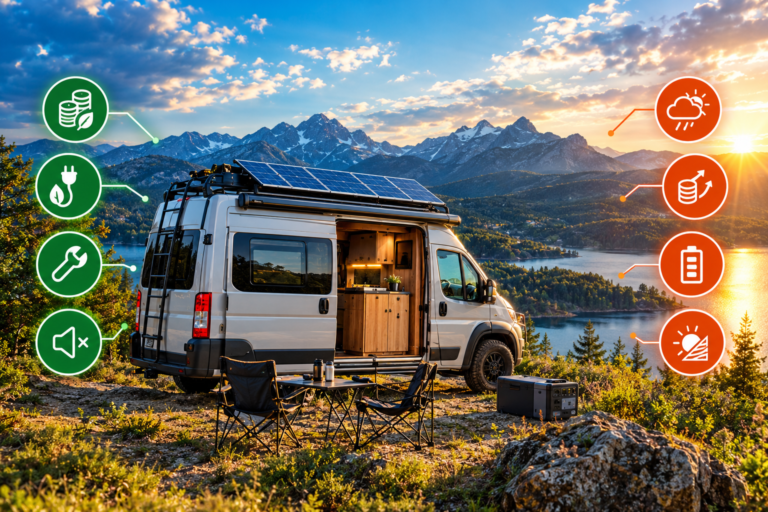
Searching for the best small camper vans usually starts with size, price and sleeping space. But there is one question that decides how comfortable your trips will be: how well can this van run on solar? A compact van with limited roof space and poor wiring access will fight you every step of the way. A well-chosen one can power a fridge, lights, fans and your devices for days without a campsite hookup.
In this guide, you will learn which types of small camper vans work best with solar, what to check before you buy, and how to size a simple system that actually fits.

Why Solar Matters More in a Small Camper Van
In a big motorhome, you can add a generator, a large battery bank and a huge roof array. In a small van, space and weight are tight, so every watt has to earn its place. Solar fits small vans well because it is silent, needs almost no maintenance and recharges your battery every time the sun is out.
The trade-off is simple: small van = small roof = limited panel capacity. That is why the van you choose and the solar plan you build should be decided together.
Types of Small Camper Vans (and How They Handle Solar)
1. Minivan campers
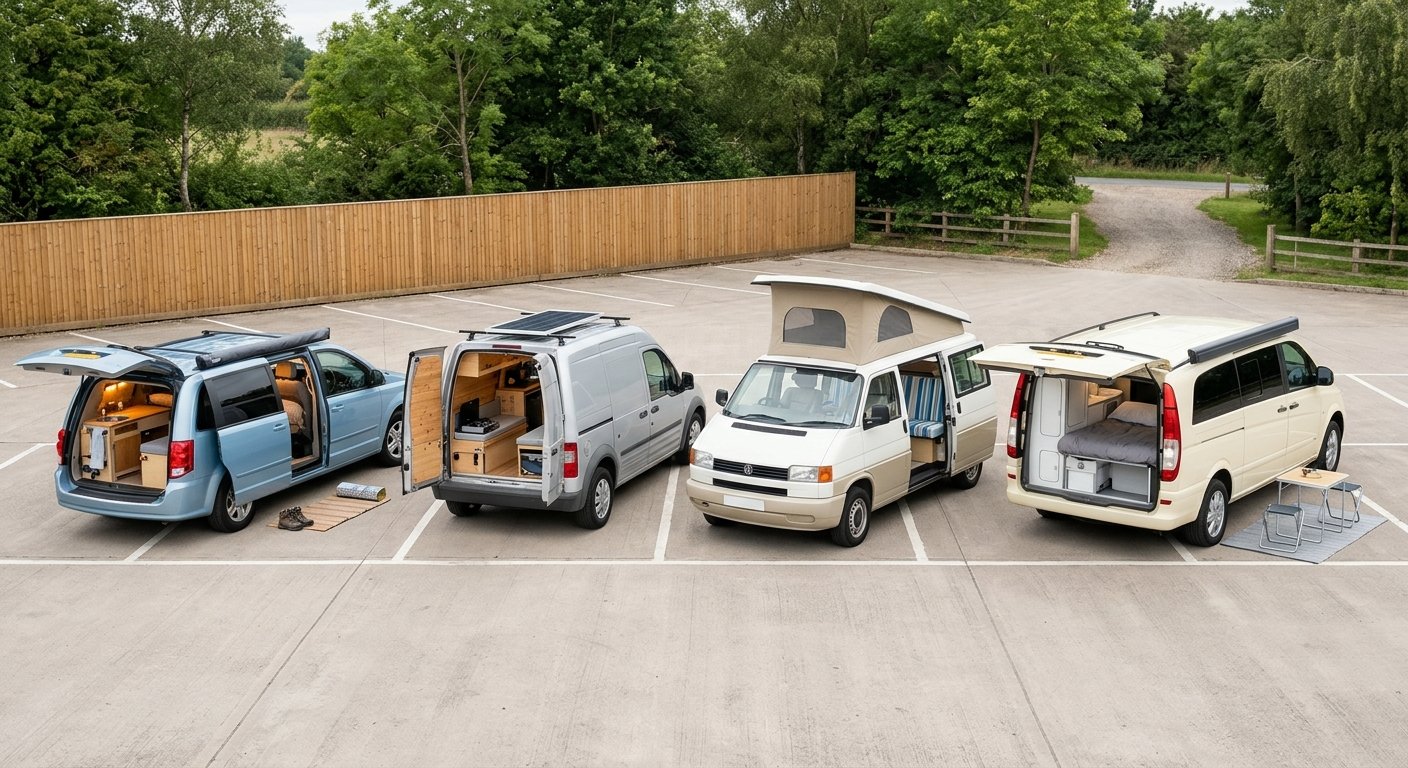
Converted minivans are the cheapest and easiest to drive and park. They also have the least roof space, often enough for only one or two panels. They suit weekend trips, light electrical loads and people who want a daily-driver vehicle.
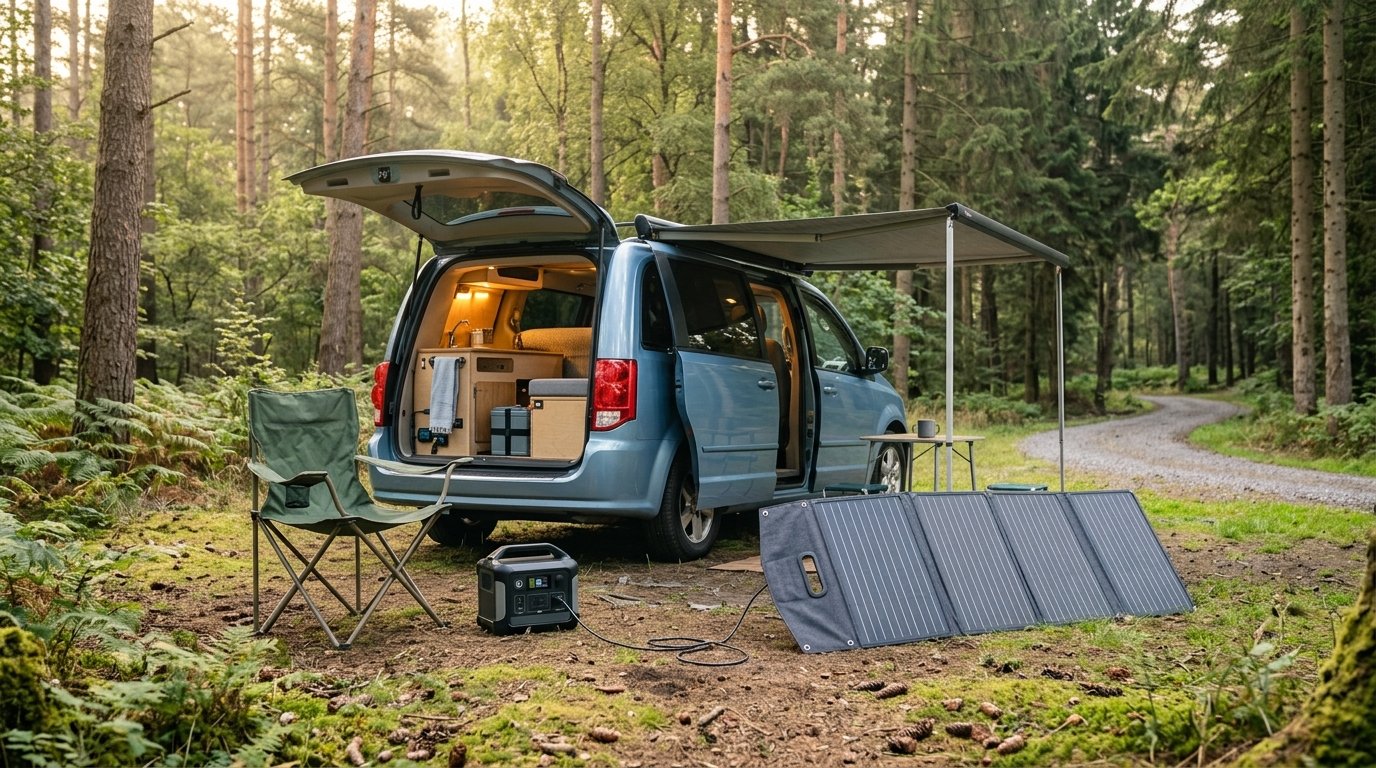
Solar fit: basic. Good for lights, phone charging and a small fan. A portable power station often makes more sense than a fixed system.
2. Compact cargo-van conversions
Compact cargo vans are a popular base for DIY and professional builds. They offer a flat roof, a squared-off interior that is easy to wall and wire, and enough room for a bed and a small kitchen.
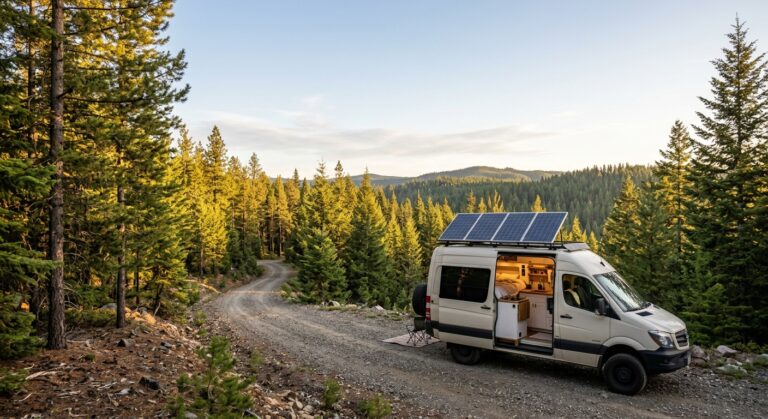
Solar fit: good. Usually room for 200 to 400 W of panels, depending on roof rails, vents and fans.
3. Pop-top and high-roof small vans
Pop-top models give you standing room without the height of a full-size van. The pop-up section limits where panels can go, so plan carefully.
Solar fit: moderate. Panels often have to sit on the fixed part of the roof, and some owners add flexible panels or a portable ground panel.
4. Mid-size vans sold as “small” camper vans
Some vans marketed as compact are really mid-size. They cost more, but they give you the best balance of living space and roof area.
Solar fit: very good. Enough roof for a solid array and enough interior room for a proper battery and inverter.
What to Check Before Buying a Small Camper Van for Solar
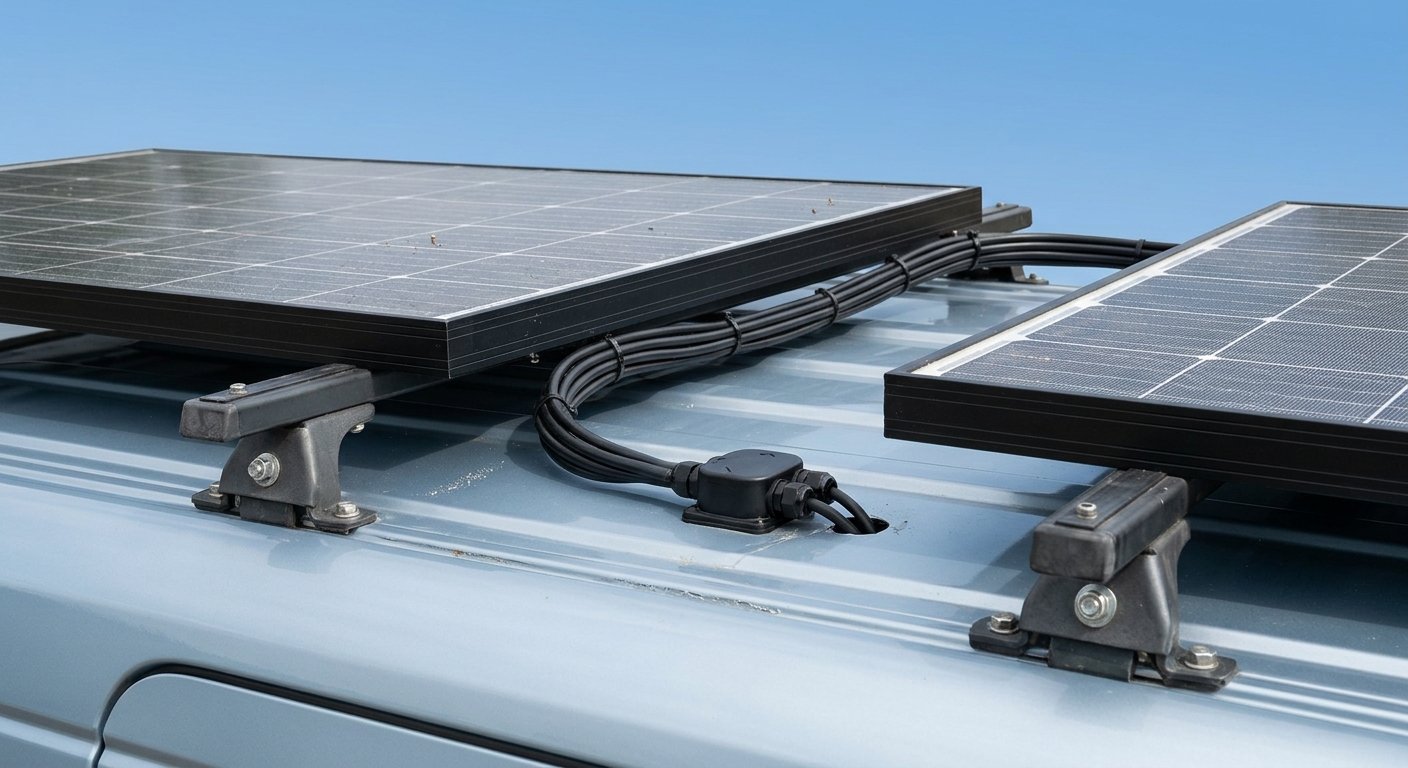
- Usable roof area: measure flat space between roof ribs, vents, fans and rails, not the total roof size.
- Payload: batteries, panels, water and gear add weight quickly. Check the payload rating.
- Wiring routes: look for a clean path from the roof to the battery. Existing cable entry points save time.
- Battery location: you need a ventilated, protected spot that is easy to reach.
- Insulation and windows: better insulation means less heating and cooling, which means less power needed.
- Existing electrical system: if the van comes pre-built, ask about battery type, charge controller and wire size.
How Much Solar Does a Small Camper Van Need?
Start with your daily energy use, not with the panel size. Add up the devices you will run and how many hours you use them. The exact numbers depend on your equipment, but a small van often lands in a range like this:
- Light use (LED lights, phone and laptop charging, small fan): a small system with roughly 100 to 200 W of solar is often enough.
- Medium use (12 V fridge, lights, fan, devices, water pump): roughly 200 to 400 W of solar with a mid-size lithium battery is a common setup.
- Heavy use (induction cooktop, coffee maker, remote work all day): this usually needs a larger battery and more panels than most small vans can carry, so plan around your real limits.
These ranges are typical starting points, not guarantees. Sun hours, season, shade and panel angle all change real results. You can estimate how much energy a panel produces at your location with the free PVWatts Calculator from the U.S. National Renewable Energy Laboratory (NREL). To get a number based on your own gear, use our Appliance Load Calculator (check this link matches your calculator page URL).
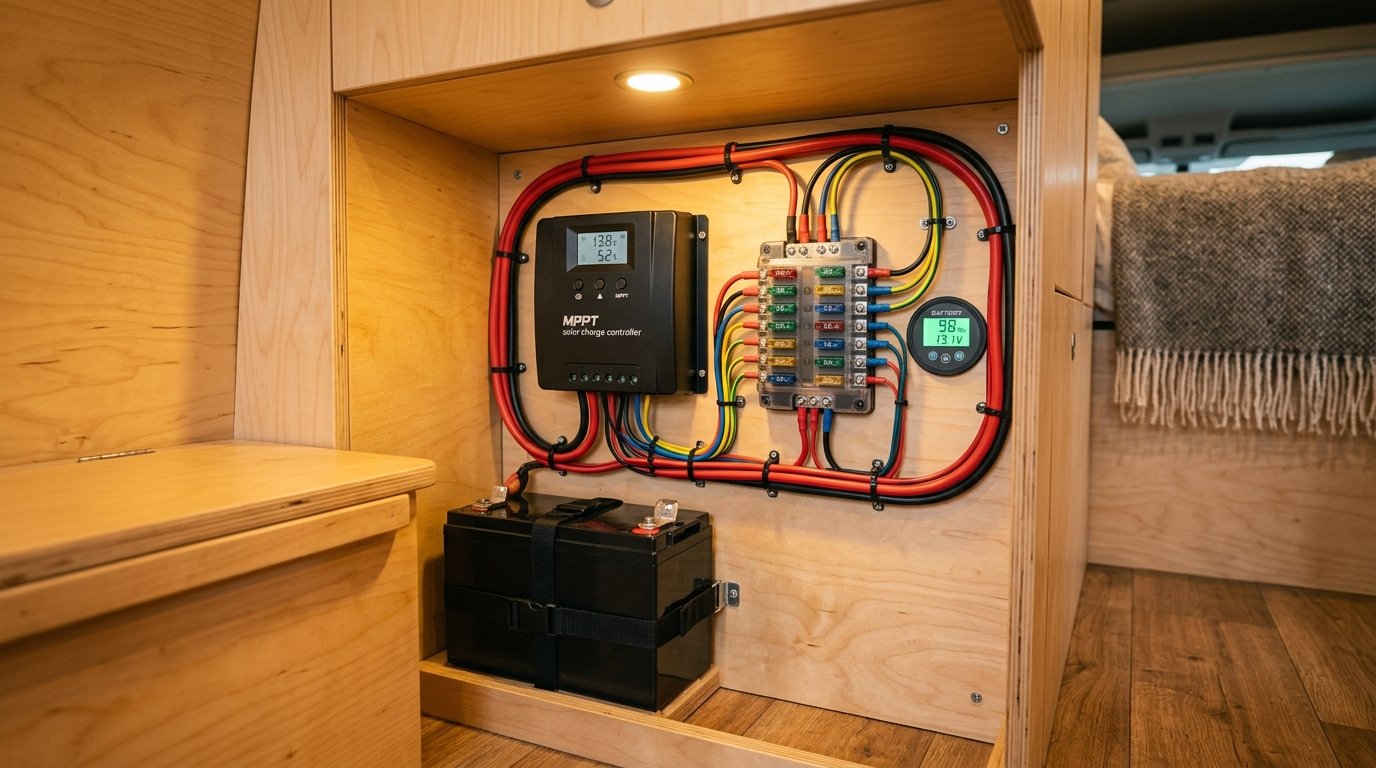
A Simple Solar Setup That Fits Most Small Vans
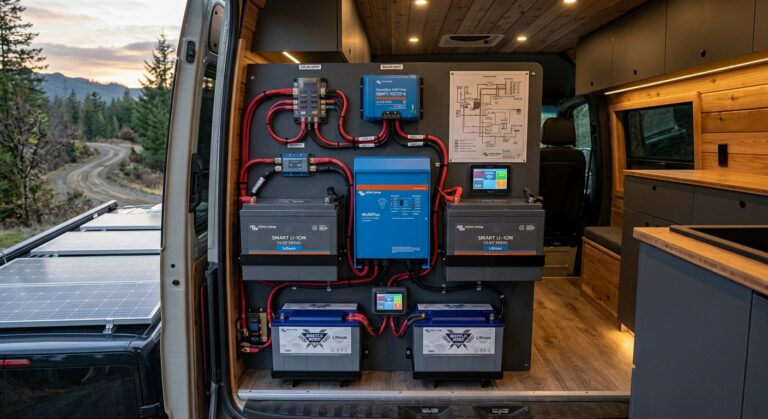
- Solar panels: fixed rigid panels on the roof, or flexible panels if roof curvature or weight is a concern.
- MPPT charge controller: gets more power out of your panels than a basic controller, especially in changing light.
- Lithium (LiFePO4) battery: light, long-lasting and able to use most of its stored energy.
- Fuses and breakers: protect every circuit. Do not skip them.
- Inverter (optional): only if you need AC power. Size it for your biggest load, and remember it wastes some energy when on.
- Battery monitor: shows you what is really happening, which helps you avoid running flat.
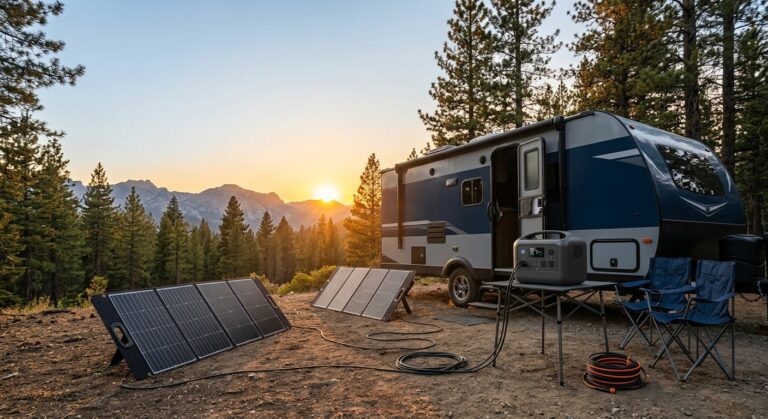
If you prefer a plug-and-play approach, a portable power station with a foldable solar panel is a flexible option, especially for minivan campers with little roof space. Read more in our RV & Van Solar guides.
Common Mistakes When Choosing a Small Camper Van for Solar
- Buying the van first, planning power later. Roof space and wiring access should be part of the buying decision.
- Oversizing the electrical system. A small van cannot carry or recharge a huge battery bank.
- Ignoring shade. Roof racks, vents and parking spots all reduce output.
- Forgetting weight. Batteries are heavy. Keep them low and close to the axle if possible.
- Choosing the wrong power sources for cooking and heating. Use propane or diesel for high-heat tasks and save solar for fridge, lights and electronics.
Which Small Camper Van Is Best for You?
- Weekend trips on a budget: a minivan camper with a portable power station.
- Regular road trips and some remote work: a compact cargo-van conversion with 200 to 400 W of solar.
- Longer stays off-grid: a mid-size van with a larger lithium battery and more roof area.
Always check current specifications with the manufacturer or builder, because roof dimensions, payload and equipment change between model years.
Frequently Asked Questions
Can a small camper van run entirely on solar?
Yes, for light to medium loads such as lights, a fridge, fans and device charging. High-power appliances like air conditioners or electric heaters are not realistic for most small vans.
How many solar panels fit on a small camper van?
It depends on roof size and obstacles. Many small vans fit about 2 to 4 standard panels, while minivans may fit only one or two.
Is a portable power station better than a fixed solar setup?
For small roofs and occasional trips, a portable power station is simpler. For frequent travel and more power, a fixed system with an MPPT controller and lithium battery is usually more efficient.
Do I need a professional to install solar in a camper van?
Not always, but battery wiring carries real fire and shock risks. If you are not confident with DC electrical work, hire a qualified installer, and review general electrical and battery safety guidance from organizations such as the National Fire Protection Association (NFPA).
Final Thoughts
The best small camper vans are not just the ones with the nicest interior. They are the ones that give you enough roof space, payload and wiring access to run the power you actually need. Pick your van with solar in mind, size your system from your real daily usage, and you will spend more time enjoying the road and less time chasing a plug.
Ready to size your setup? Use our Appliance Load Calculator to estimate your daily energy use, then explore our RV & Van Solar guides to pick the right panels and battery.