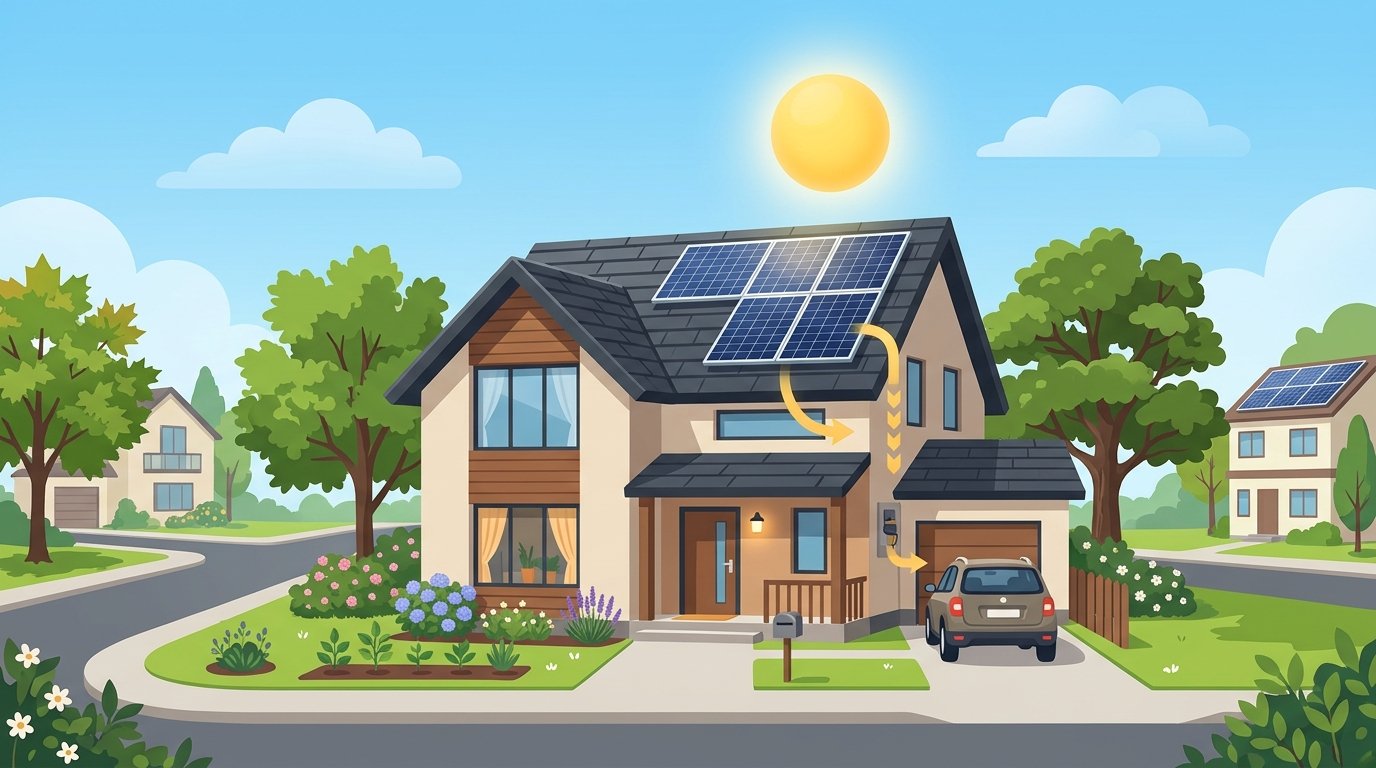
How to Save Electricity and Reduce Your Power Bill
If you want to know how to save electricity and reduce your power bill, the good news is that you do not need to rebuild your house or buy expensive gadgets. According to the U.S. Department of Energy’s Energy Saver program, most households can cut waste with a mix of free habit changes, low-cost upgrades and smarter equipment choices.
This guide follows the same order the experts recommend: understand where your electricity goes, fix the biggest sources of waste first, then decide whether generating your own power with solar makes sense.
 ” style=”max-width:100%;height:auto;”>
How to Save Electricity and Reduce Your Power Bill at Home
Before you change anything, you need to know what is driving your bill. The Department of Energy’s Energy Saver Guide starts with the same advice: assess your home’s energy use, then build a plan. Heating and cooling alone typically make up about 32% of a home’s energy use, and water heating adds roughly 18%.
Identify Which Appliances Use the Most Electricity
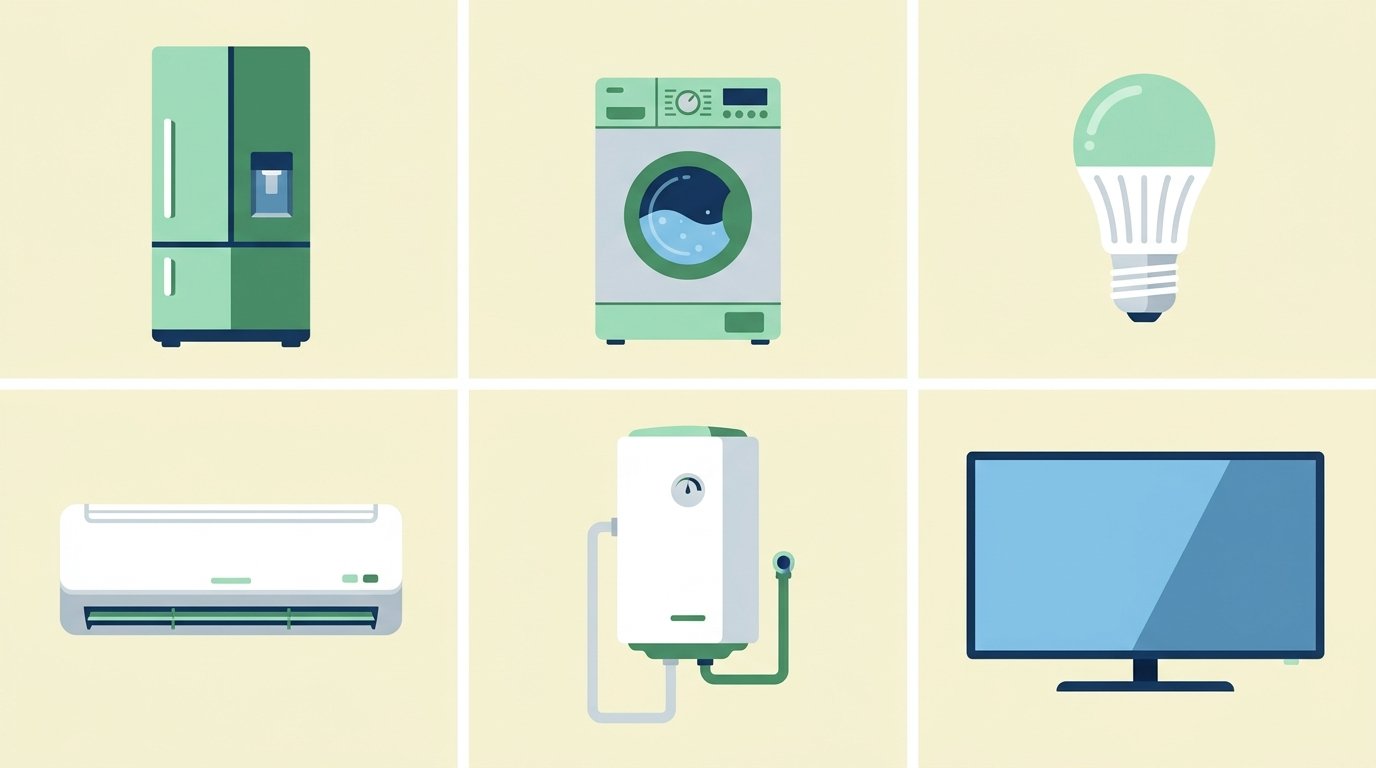
The biggest electricity users in most homes are cooling, heating, water heating, lighting, refrigerators and freezers, laundry, and electronics. To find your own top consumers:
- Read your utility bill and compare winter and summer months to see how much of your usage is heating or cooling.
- Check your smart meter portal if you have one. Many utilities show hourly usage and offer bill alerts.
- Run a DIY audit with the free Home Energy Saver tool, which estimates yearly savings and payback times for each upgrade.
- Calculate appliance loads. Use our Appliance Load Calculator to see how many watt-hours each device uses per day. This is also the first step if you later size a solar system.
- Consider a professional audit. A certified auditor can find air leaks, missing insulation and inefficient equipment. See Energy.gov’s guidance or look for a Home Energy Score partner.
How to Save Electricity and Reduce Your Power Bill with Simple Daily Habits
Habits cost nothing, so start here:
- Turn off lights, computers and TVs when you leave a room. Use sleep mode on computers and monitors, and skip screen savers.
- Unplug chargers and idle devices, or use an advanced power strip. The Department of Energy notes that electronics drawing standby power can add roughly 5% to 10% to your monthly bill.
- Open curtains during the day to use natural light, and close them at night in cold weather.
- Check whether your utility offers time-based rates. If it does, run the dishwasher and washing machine at night, when electricity is cheaper.
- Set your TV to the standard “home” picture mode, which can cut its energy use by about 18% to 30%.
For more everyday ideas, see the appliances and electronics section of Energy Saver.
Improve Heating, Cooling, and Lighting Efficiency
Heating, cooling and lighting are where the largest and fastest savings usually are.
Reduce Air Conditioning and Heating Costs
- Seal air leaks first. Caulking and weatherstripping around windows, doors, outlets and attic hatches can save 10% to 20% on heating and cooling bills, according to the Department of Energy.
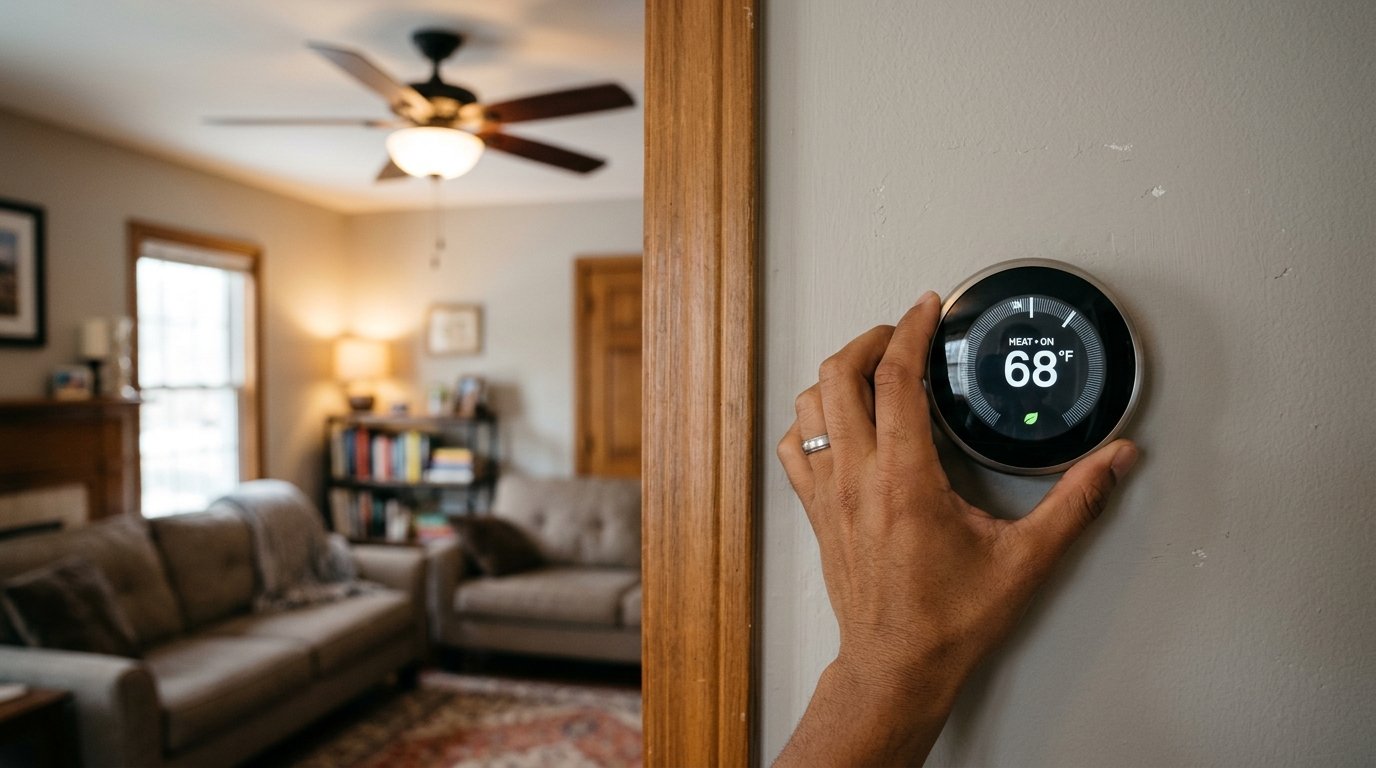
- Adjust your thermostat. Turning it back 7°F to 10°F for eight hours a day can save up to about 10% a year. A programmable or smart thermostat does this automatically. If you have a heat pump, use a model designed for heat pumps.
- Use fans. A ceiling fan lets you raise the thermostat about 4°F in summer with no loss of comfort. Turn it off when you leave the room.
- Maintain your system. Clean or replace filters monthly, keep vents clear of furniture, and seal and insulate leaking ducts, which can add hundreds of dollars a year to bills.
- Block the sun in summer. Keep curtains closed on sunny windows during the day and consider awnings on south- and west-facing windows.
- Think about a heat pump. They are the most efficient form of electric heating and can cut heating electricity use by roughly 50% compared with electric furnaces or baseboard heaters.
Use Energy-Efficient Lighting and Appliances
An ENERGY STAR certified LED bulb uses up to 90% less energy than an old incandescent bulb and lasts 15 to 25 times longer. Replacing your five most-used fixtures or bulbs with ENERGY STAR certified products can save around $75 a year, according to the Department of Energy.
When you buy appliances, you pay twice: once at the store and again every month on your bill. Compare the yellow EnergyGuide label and look for the ENERGY STAR logo. Before buying, check for rebates with the ENERGY STAR Rebate Finder and the DSIRE database of state and utility incentives.
How to Save Electricity and Reduce Your Power Bill with Solar Power
Efficiency should come first, because the less electricity you need, the smaller (and cheaper) a solar system has to be. Once your home is efficient, solar can cover much of what you still use.
How Solar Panels Can Reduce Your Electricity Bill
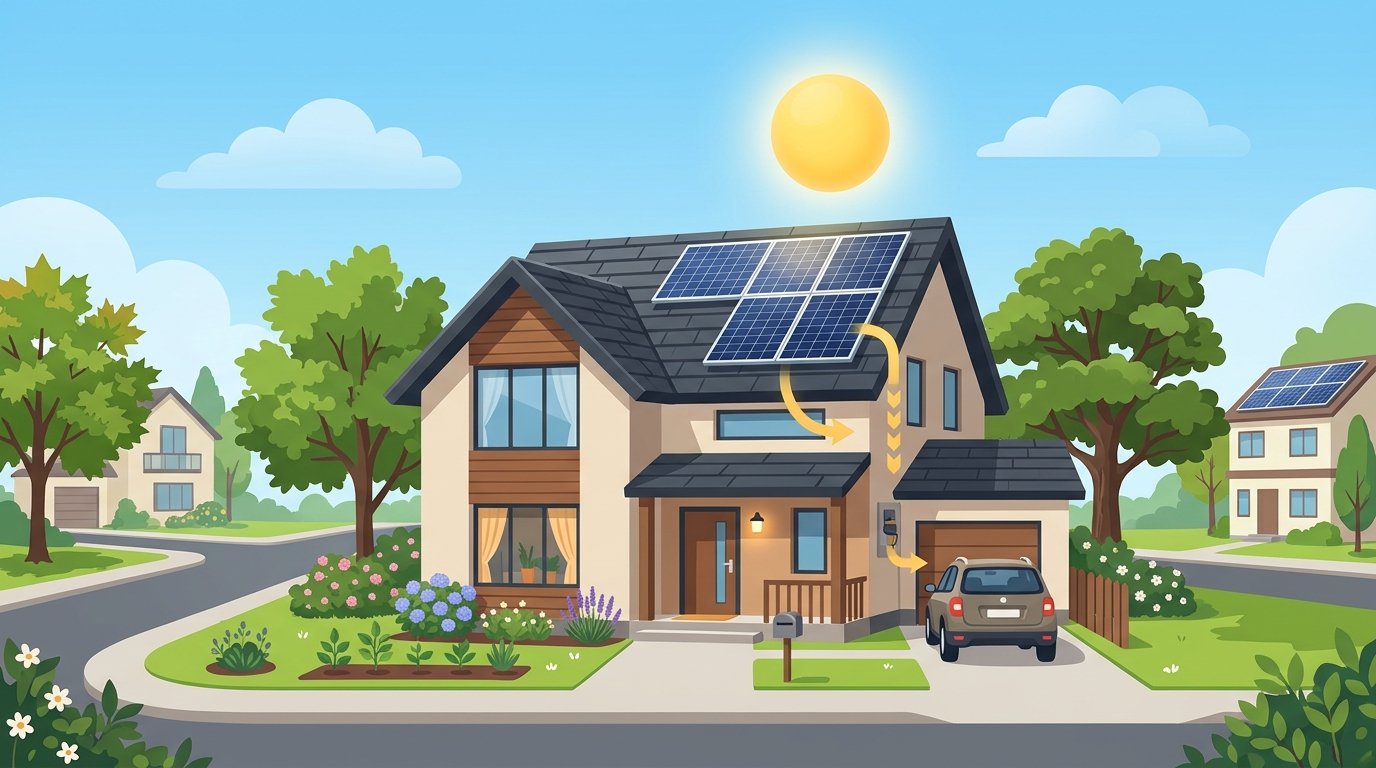
Solar panels turn sunlight into electricity you use directly in your home, so you buy less from the grid. The Department of Energy points out that solar often makes sense for households that already did the efficiency work, have enough sunlight, and use extra electricity, for example to charge an electric vehicle.
If you cannot install panels because you rent or your roof is shaded, community solar lets you buy into a shared system. Almost half of U.S. households cannot install rooftop solar for these reasons. Many utilities also let you buy renewable electricity directly.
New to the topic? Start with our Solar Basics guides, and read DOE’s Homeowner’s Guide to Going Solar.
Is Solar Power Worth the Initial Investment?
It depends on four things:
- Your electricity rate. The higher your rate per kWh, the faster solar pays back.
- Your sunlight. An unshaded, south-facing roof is ideal.
- Your ownership option. You can pay with cash or a loan, lease a system, or sign a power purchase agreement (PPA) where you buy the power the system produces.
- Available incentives. Federal, state and utility incentives have changed in recent years, so check current rules on DSIRE before you decide.
Use the Sizing & Calculators section of Solar Guide Hub to estimate how much energy you need to cover. Always get several quotes from certified installers, because proper installation and electrical safety matter.
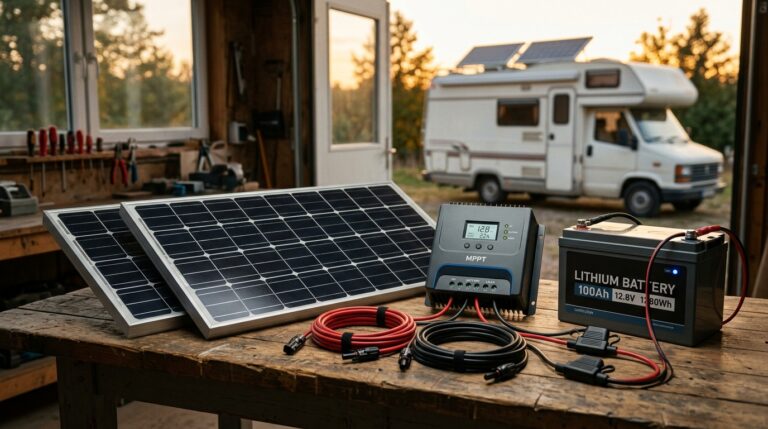
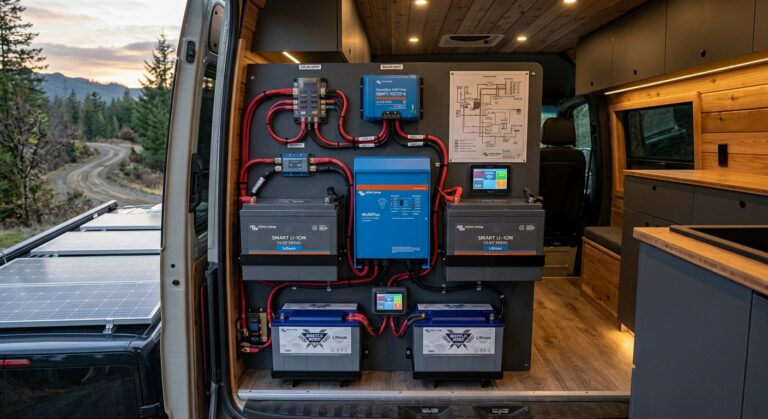
Solar is not only for houses. If you travel or live on the road, see our RV & Van Solar guides.
Reduce Electricity Costs in Your Kitchen and Laundry Room
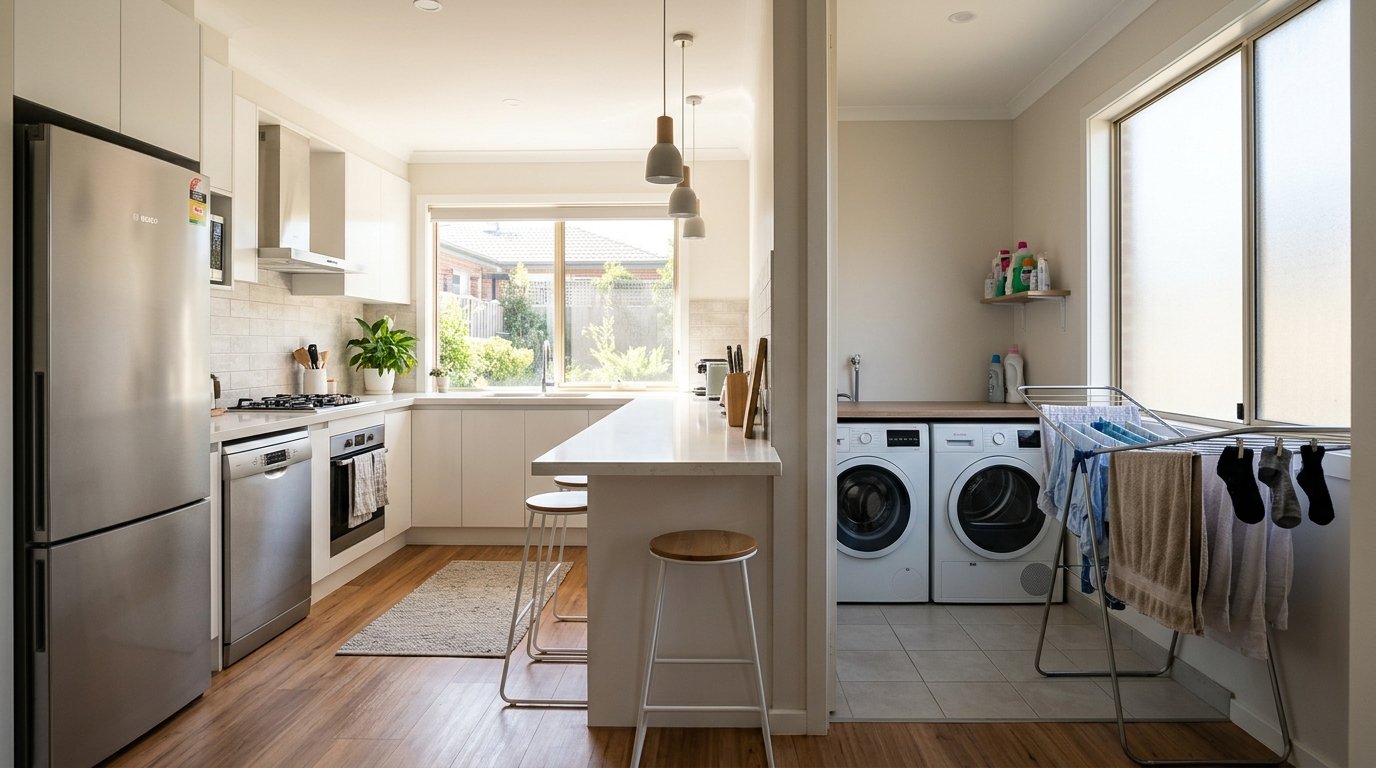
In the kitchen
- Set the refrigerator to 35°F to 38°F and a stand-alone freezer to 0°F. Test door seals with a sheet of paper: if it slides out easily, the seal needs attention.
- If your refrigerator is more than 10 years old, an ENERGY STAR model could save you hundreds of dollars over time. Recycle old second fridges rather than keeping them running.
- Run the dishwasher only when it is full, scrape instead of pre-rinsing, and air dry instead of using the heated dry setting.
- Use small appliances such as air fryers, toaster ovens or microwaves for small meals. They use less energy and add less heat to your kitchen in summer.
- Cover pots, and match the pan size to the burner.
In the laundry room
- Wash in cold or warm water. Most of a washer’s energy goes to heating water, and using warm instead of hot can cut a load’s energy use in half.
- Wash full loads and use a high-speed spin to remove moisture before drying.
- Air dry when you can. When you use the dryer, choose lower heat, clean the lint screen after every load and check the vent.
- When replacing, ENERGY STAR dryers use about 20% less energy, and heat pump dryers can save 20% to 60%.
Water heating
- Set the water heater to 120°F.
- Insulate a warm-to-the-touch tank, which can save 7% to 16% of water heating costs, and insulate hot water pipes.
Common Mistakes That Increase Your Electricity Bill
- Skipping air sealing and insulation and going straight to expensive equipment. Leaks waste the energy your new system produces.
- Constantly changing the thermostat or setting back a heat pump manually, which can trigger costly electric backup heating.
- Ignoring standby power. Idle electronics, chargers and set-top boxes quietly add to your bill every month.
- Buying the cheapest appliance without checking the yearly operating cost on the EnergyGuide label.
- Choosing an oversized air conditioner. An oversized unit runs less efficiently than a properly sized one.
- Neglecting maintenance: dirty filters, blocked vents, dirty fridge coils and leaking ducts.
- Leaving lights, fans and exhaust fans running in empty rooms.
- Going solar before reducing consumption, which leads to paying for a system bigger than you need.
How to Save Electricity and Reduce Your Power Bill: Your Action Plan
You do not have to do everything at once. Follow this order to get the biggest return first:
| Step | Action | Cost |
|---|---|---|
| 1 | Review your bill and find your biggest electricity users (use the Appliance Load Calculator) | Free |
| 2 | Adopt daily habits: lights off, unplug idle devices, thermostat schedule, off-peak laundry | Free |
| 3 | Swap your most-used bulbs for LEDs | Low |
| 4 | Seal air leaks, then check insulation | Low to medium |
| 5 | Install a smart or programmable thermostat and maintain HVAC filters and ducts | Low to medium |
| 6 | Replace old appliances with ENERGY STAR models, checking rebates first | Medium to high |
| 7 | Evaluate solar or community solar once your usage is as low as possible | High |
Source for tips and figures: the U.S. Department of Energy’s Energy Saver Guide and Energy.gov. Savings vary by home, climate and utility rates.
Ready to take the next step? Explore our Solar Basics articles or use the Sizing & Calculators tools to see what a solar system could do for your bill.