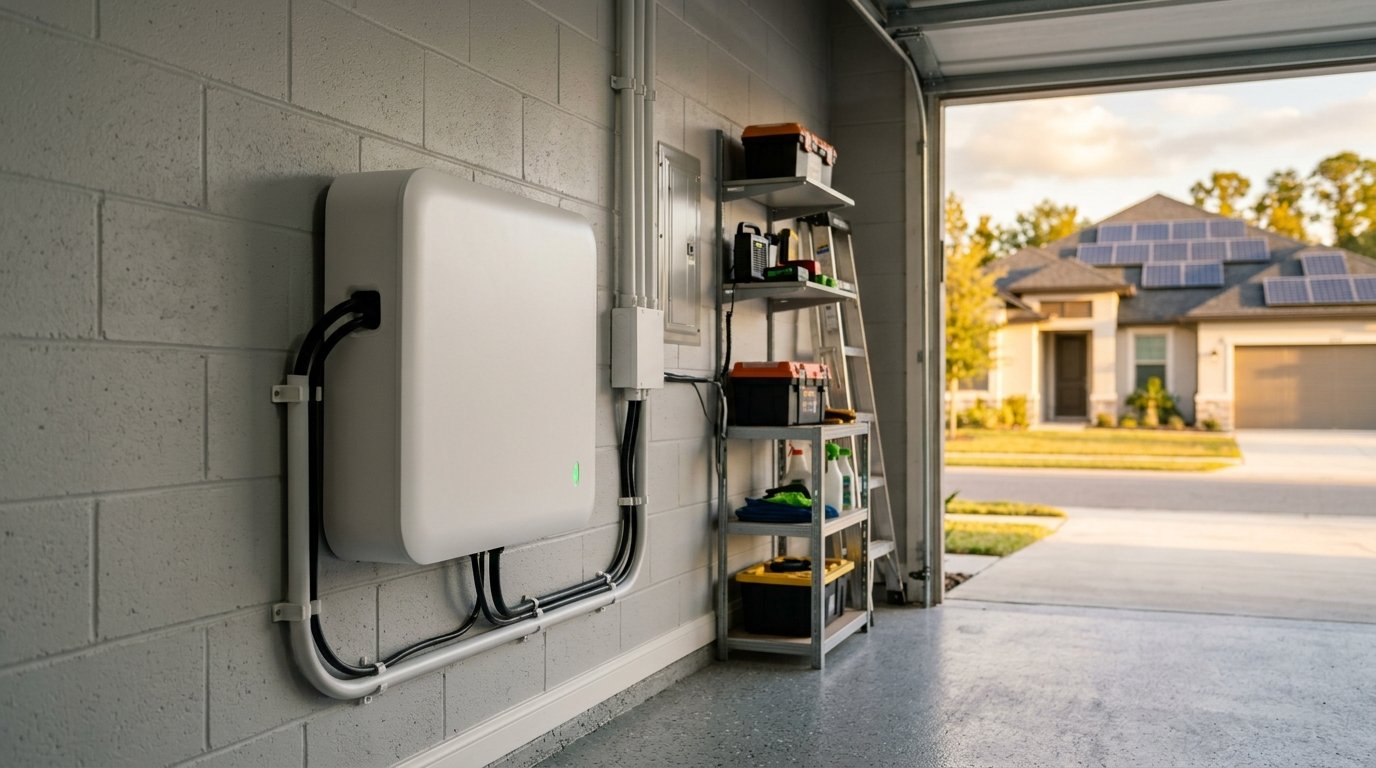
Home Batteries in 2027: The Complete Guide for Homeowners
Electricity prices keep climbing, storms keep knocking out the grid, and more households are asking the same question: should I add storage to my home? If you’re researching home batteries in 2027, this guide covers how they work, what they cost, how to pick the right one, and whether the investment makes sense for you.
What Are Home Batteries in 2027 and How Do They Work?
A home battery is a rechargeable energy storage system installed in or beside your house. It stores electricity and releases it when you need it, so you’re no longer limited to using power at the moment it’s produced or delivered.
Most systems follow the same basic cycle:
- Charging: The battery fills from your solar panels, the grid, or both.
- Storing: Electricity is held as chemical energy, almost always in lithium-ion cells. Lithium iron phosphate (LFP) has become the dominant chemistry because it is stable, long-lasting, and less prone to overheating.
- Discharging: An inverter converts the stored direct current (DC) into the alternating current (AC) your appliances use, and the battery supplies your home when solar output drops, prices peak, or the grid goes down.
Modern systems also include software that decides when to charge and discharge based on your usage, electricity rates, and weather forecasts. You can usually monitor everything from a phone app.
Benefits of Home Batteries in 2027 for Homeowners
The core benefit is control: you decide when your home uses its own stored energy and when it draws from the grid. Two use cases drive most purchases.
Home Batteries in 2027 for Solar Energy Storage
Solar panels produce the most power at midday, when many households use the least. Without storage, the surplus is exported to the grid, often at a lower rate than you pay to buy electricity back in the evening.
A battery captures that surplus and lets you use it after sunset. The benefits include:
- Higher self-consumption: You use more of the solar energy you generate.
- Lower evening bills: You avoid buying peak-rate electricity.
- Better value under time-of-use pricing: You can charge when power is cheap and discharge when it is expensive.
- Less dependence on net-metering rules, which vary by region and have become less generous in many places.
Home Batteries in 2027 for Power Outage Protection
For many homeowners, backup power is the main draw. When the grid fails, a battery with backup capability switches on within moments and keeps selected circuits running, often so quickly you barely notice.
Depending on its size, a battery can keep essentials like the refrigerator, lights, internet router, phone chargers, and medical devices running. Unlike a generator, it is silent, produces no fumes, and needs no fuel. Paired with solar, it can recharge during the day and keep going through a multi-day outage.
How to Choose the Best Home Batteries in 2027
With so many models on the market, it helps to compare them on a few measurable points rather than brand names alone.
Home Batteries in 2027: Capacity, Power Output, and Battery Life
- Usable capacity (kWh): How much energy the battery can actually deliver. Most home batteries land between about 5 and 15 kWh, and you can often stack multiple units. A typical household uses roughly 20 to 30 kWh per day, so one battery rarely covers everything, but it can cover your essentials.
- Power output (kW): Capacity is the size of the tank; power output is how fast it can empty. A battery with high capacity but low continuous output may be unable to run a heat pump or well pump at the same time as other loads.
- Round-trip efficiency: The share of energy you get back out versus what you put in. Look for roughly 90% or higher.
- Cycle life and warranty: Check the guaranteed number of cycles and the warranty term (commonly around 10 years), along with how much capacity the manufacturer promises to retain at the end of that period.
- Chemistry and safety: LFP is a strong default for home use. Also look for recognized safety certifications.
- AC- or DC-coupled: DC-coupled systems can be more efficient with new solar, while AC-coupled systems are easier to add to an existing array.
Home Batteries in 2027: Costs, Savings, and Incentives
Installed prices vary widely by country, battery size, and installer, but a typical complete home battery installation often falls in the range of several thousand to roughly twenty thousand dollars. Always compare the total installed price (battery, inverter, labor, permits) and not just the sticker price of the unit.
Your savings depend on several things:
- Your electricity rates and whether you have time-of-use pricing
- How much solar you already have, or plan to add
- How often outages affect you
- Whether your utility offers payments for sharing stored energy during peak demand
A note on incentives: Tax credits, rebates, and utility programs change often and differ by location, and some have been reduced or ended recently. Before you buy, check your national and local rules, your utility’s programs, and any financing offers from installers. Don’t assume a credit that existed in a previous year is still available.
Home Batteries in 2027 vs. Generators: Which Is Better?
Both keep the lights on, but they work very differently.
| Factor | Home battery | Generator |
|---|---|---|
| Upfront cost | Higher | Lower |
| Running cost | Very low (recharges from solar or grid) | Fuel needed |
| Noise and fumes | Silent, none | Loud, exhaust |
| Switch-over | Automatic, near-instant | Often manual or slower |
| Outage duration | Limited by stored energy unless paired with solar | Runs as long as there is fuel |
| Maintenance | Minimal | Regular servicing |
| Everyday value | Can cut bills daily | Only used in emergencies |
The short answer: A battery wins for convenience, cleanliness, and day-to-day savings. A generator can still make sense for very long outages or very high loads where cost matters most. Some homeowners combine both: a battery for daily use and short outages, and a generator as a last-resort backup.
Are Home Batteries in 2027 Worth the Investment?
It depends on what you want from the system. A battery is most likely to pay off if:
- You have solar panels and receive low rates for exported power
- Your utility charges steep peak rates
- Outages in your area are frequent or last a long time
- You rely on electricity for medical equipment or work from home
- Local incentives lower the upfront cost
It’s a harder case if you have cheap, flat electricity rates, rare outages, and no solar. In that situation the financial payback can be long, and you would be paying mainly for peace of mind. A good installer will model your actual usage and give you an estimated payback period, so ask for one and compare quotes from at least three companies.
How to Install and Maintain Home Batteries in 2027
Installation: Home batteries should be installed by a certified professional. The process generally includes:
- A site assessment of your electrical panel, available space, and energy usage
- System design and sizing, including which circuits to back up
- Permits and utility approval
- Installation of the battery, inverter, and wiring, which usually takes one to two days
- Commissioning, testing, and app setup
Placement matters. Batteries do best in moderate temperatures, so garages, utility rooms, and shaded exterior walls are common choices, following the manufacturer’s and local code requirements.
Maintenance: Modern systems need very little. To keep yours healthy:
- Check the app regularly for alerts and performance
- Keep the area around the battery clear and ventilated
- Install firmware updates when offered
- Avoid extreme heat or cold exposure
- Have the system inspected if you notice unusual behavior
Frequently Asked Questions About Home Batteries in 2027
How Long Can Home Batteries in 2027 Power a House?
It depends on battery size and what you power. A 10 kWh battery running only essentials (fridge, lights, router, chargers) might last 12 to 24 hours or more, while running an air conditioner, electric oven, or electric heating can drain it in a few hours. With solar panels recharging the battery each day, you can stretch that into a multi-day outage.
Can Home Batteries in 2027 Work Without Solar Panels?
Yes. A battery can charge from the grid, ideally during cheap off-peak hours, and supply your home during expensive peaks or outages. Solar makes the economics stronger and gives you a renewable way to recharge, but it isn’t required.
How Long Do Home Batteries in 2027 Last?
Most are designed to last about 10 to 15 years, and warranties typically cover around 10 years or a set number of cycles. Capacity gradually declines with use, so a battery that is still working after a decade may hold somewhat less than when it was new. Good temperature management and avoiding constant full discharges help extend its life.
To learn more about related equipment, check out our guide on choosing the right solar inverter.
Final Thoughts
Home batteries in 2027 are more capable, safer, and more flexible than earlier generations. Whether your goal is backup power, lower bills, or getting more from your solar panels, start by understanding your own energy use, compare total installed costs, and check current incentives before you commit.
For more details on global energy trends and official guidelines, you can visit the U.S. Department of Energy.